Finding a snack that's high in protein and low in calories sounds simple until you start reading labels. One bar has 20 g of protein but 300 kcal. Another has 15 g at 150 kcal. A puff has 21 g at 120 kcal. The per-serving numbers on packages are almost impossible to compare because serving sizes vary wildly — from 25 g snack bites to 100 g meal-replacement bars.
That's why we normalise everything to per 100 g and rank by a single metric: protein per 100 kcal. It strips away the packaging tricks and tells you exactly how much protein you're getting for each calorie you spend. We scored over 400 snackable products across bars, crisps, puffs, pretzels, and savoury snacks. Here's what the data says.
MacroXray may earn a commission on some links in this article at no extra cost to you. Full disclosure.
The overall winners: protein efficiency across all formats
Which products, regardless of whether they're a bar, a puff, or a pretzel, give you the most protein per calorie?
The range is striking. The most efficient snack delivers 18.67 g of protein per 100 kcal. The least efficient products in the catalogue? Under 2 g. That's a 9× difference between products that all market themselves as "high protein."
The format that wins: puffs and airy snacks
The single biggest insight from this analysis is that format matters more than brand. Airy, puffed snacks consistently outperform dense bars on protein per calorie because puffs are mostly protein and air — the structure itself is low-calorie.
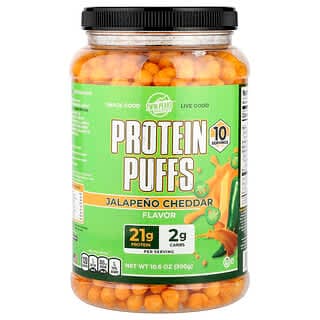
70 g protein per 100 g — the highest protein density of any snack in the catalogue.
Twin Peaks Protein Puffs are the standout example. The Jalapeno Cheddar variant delivers 70 g of protein per 100 g — that's 70% protein by weight — at 400 kcal per 100 g. The serving size is just 30 g, which means each bag is roughly 120 kcal and 21 g of protein. The Mesquite BBQ and Nacho Cheese variants hit the same numbers. We covered these in our Quest Chips vs Twin Peaks Puffs comparison — they're a genuinely different category of product.
The surprise champion: David Protein Bar
The highest protein efficiency in the entire snack catalogue doesn't belong to a puff, a crisp, or a traditional bar. It belongs to David Protein Bar (Cake Batter) — a sweet snack that delivers 18.67 g of protein per 100 kcal, the best ratio we've recorded.
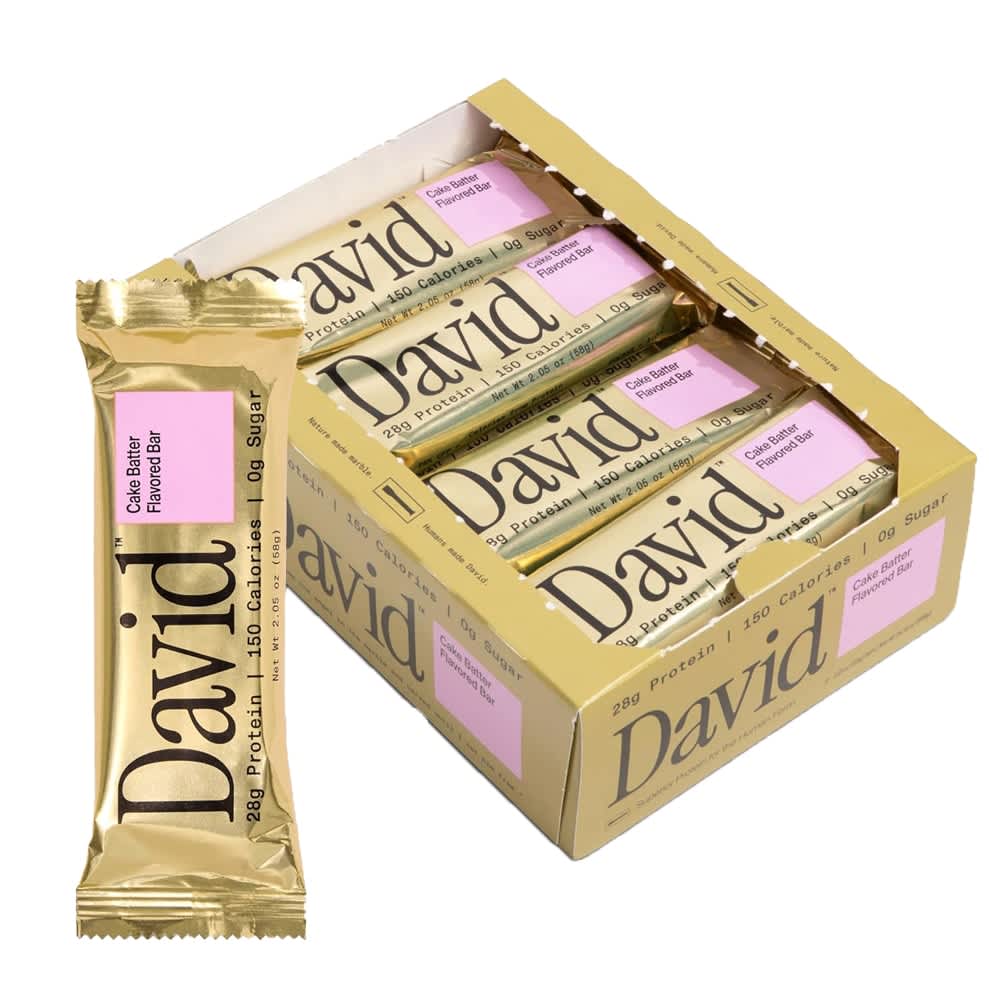
XRay Score of 94.0 — the #1 ranked sweet snack. 45.16 g protein per 100 g at just 242 kcal.
The numbers are remarkable: 45.16 g of protein per 100 g, just 242 kcal per 100 g, 3.23 g of fat, and zero sugar. At a 62 g serving, that's about 150 kcal and 28 g of protein — a ratio that makes most traditional protein bars look inefficient. The Blueberry Pie variant delivers identical macros with an XRay Score of 93.1.
David isn't a household name in the protein space, which is exactly why tools like the XRay Score exist — to surface products that the data says are exceptional but the marketing budget says nobody knows about yet. Every product page on MacroXray shows where a product ranks in its category, so under-the-radar winners like this don't stay hidden.
The ultra-low-calorie play: Japanese chicken bars
If your priority is absolute calorie minimisation, nothing in the catalogue comes close to Maruzen PROFIT Chicken Tenderloin bars.
These are real chicken strips — not protein powder pressed into a bar shape — and the macros reflect that: 106 kcal per 100 g, 17.08 g of protein, and 0.62 g of fat. A single 65 g bar is just 69 kcal with 11 g of protein. That's a protein snack you can eat three of and still be under 210 kcal with 33 g of protein.
The Mild Salt variant (XRay 83.2) and Black Pepper variant (XRay 87.7) both rank in the top 5 savoury snacks. They're currently only available via Asian retailers — worth the effort if you're serious about cutting. We profiled these in our wildest protein snack flavors piece.
Crisps and pretzels: the savoury middle ground
For something that feels like a normal snack, Quest Tortilla Chips (Chili Lime) lead the protein crisps category with 14.29 g of protein per 100 kcal and an XRay Score of 90.2. A 32 g serving is about 140 kcal and 20 g of protein — a bag of chips that outperforms many protein bars.
Crisp Power Protein Pretzels offer another angle: 52.91 g of protein per 100 g with 21.16 g of fiber, in a pretzel format that feels nothing like a supplement. As we explored in our fiber article, pretzels are surprisingly fiber-dense because of their dough-based structure.
The bottom line
The most efficient protein snacks aren't always the ones with the biggest marketing budgets. David Protein Bar, Twin Peaks Puffs, and Maruzen chicken strips are all relatively unknown products that objectively outperform many mainstream options on protein per calorie.
The macro gap between the best and worst protein snacks is enormous — a 9× difference in protein per calorie between the top and bottom of the catalogue. Format matters (puffs and airy structures beat dense bars), brand matters less than you'd think, and the only reliable way to know where a product actually stands is to look at the normalised numbers.
That's what MacroXray is for. Every product in our catalogue is scored, ranked, and comparable — from mainstream Quest bars to Japanese chicken jerky. Browse the full catalogue, benchmark your current go-to, or let Optimize surface the best options for your specific goal.