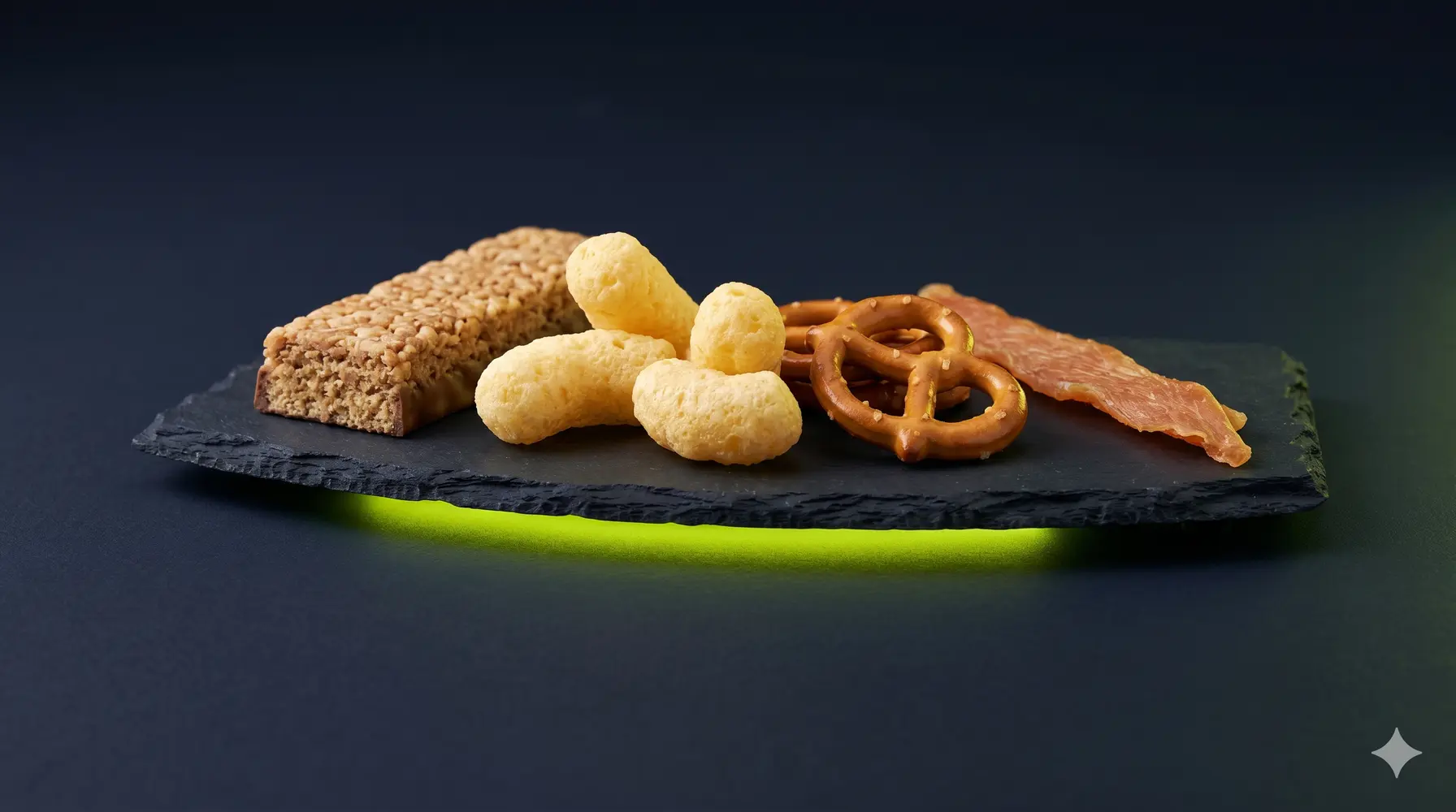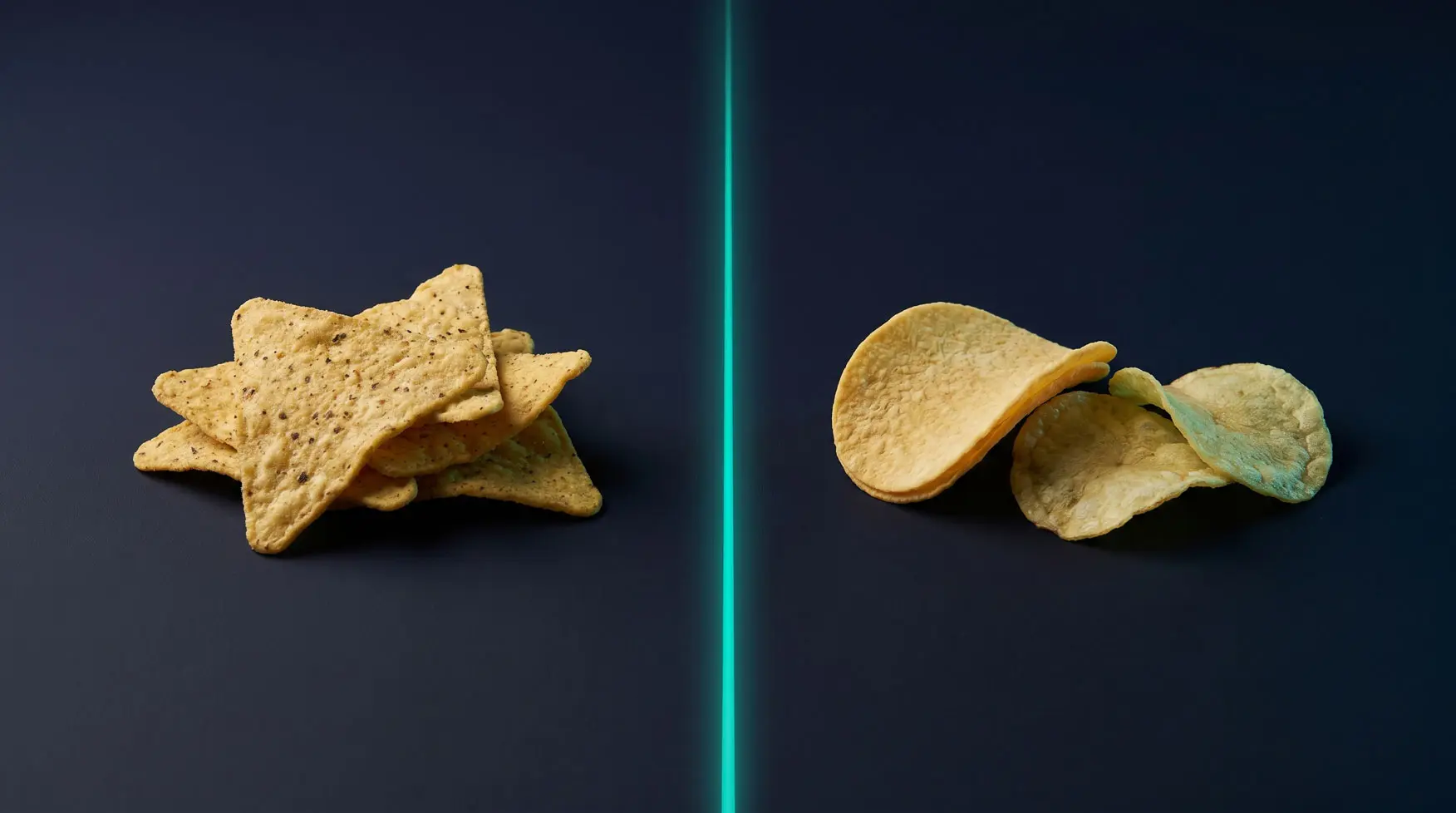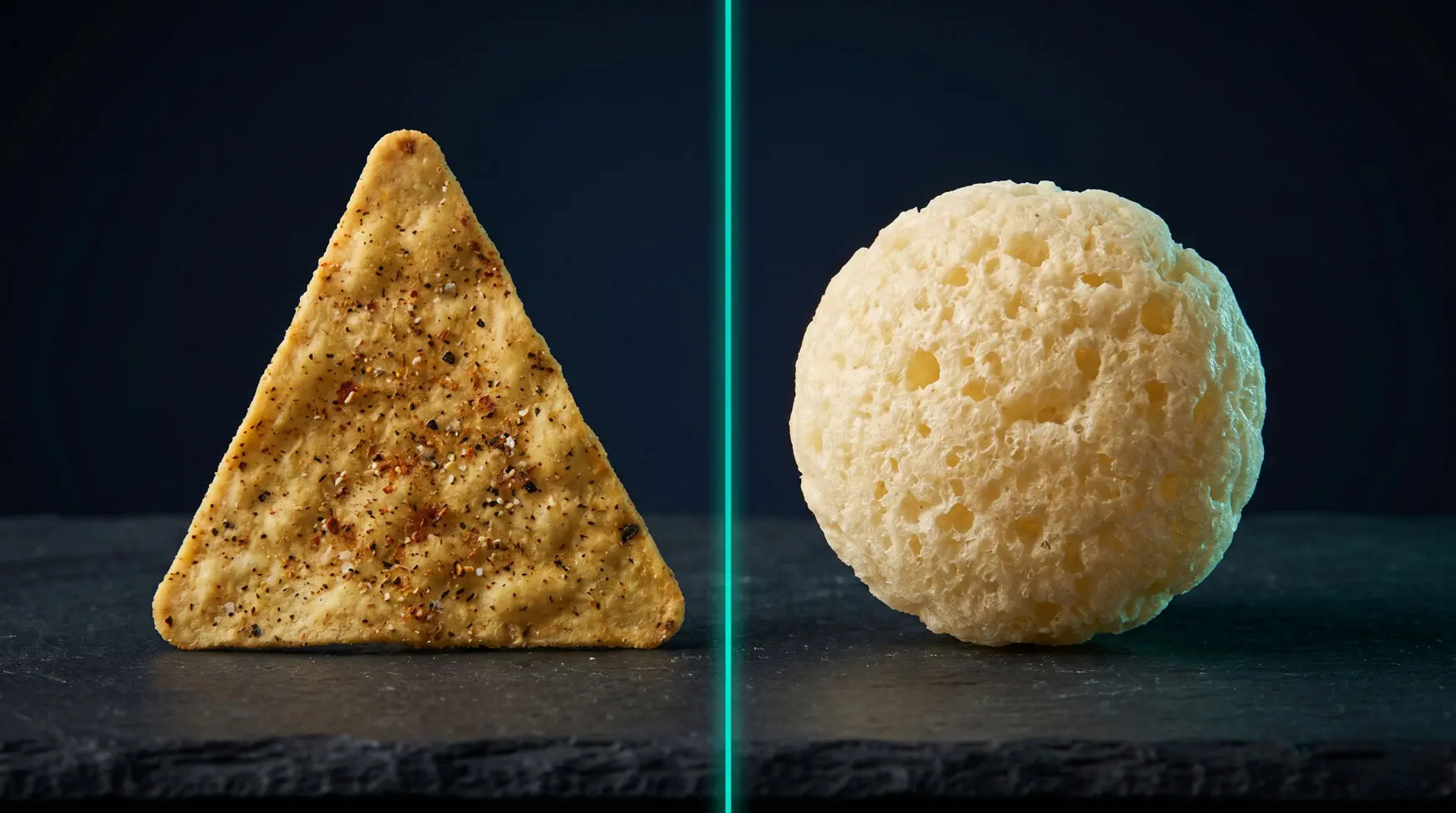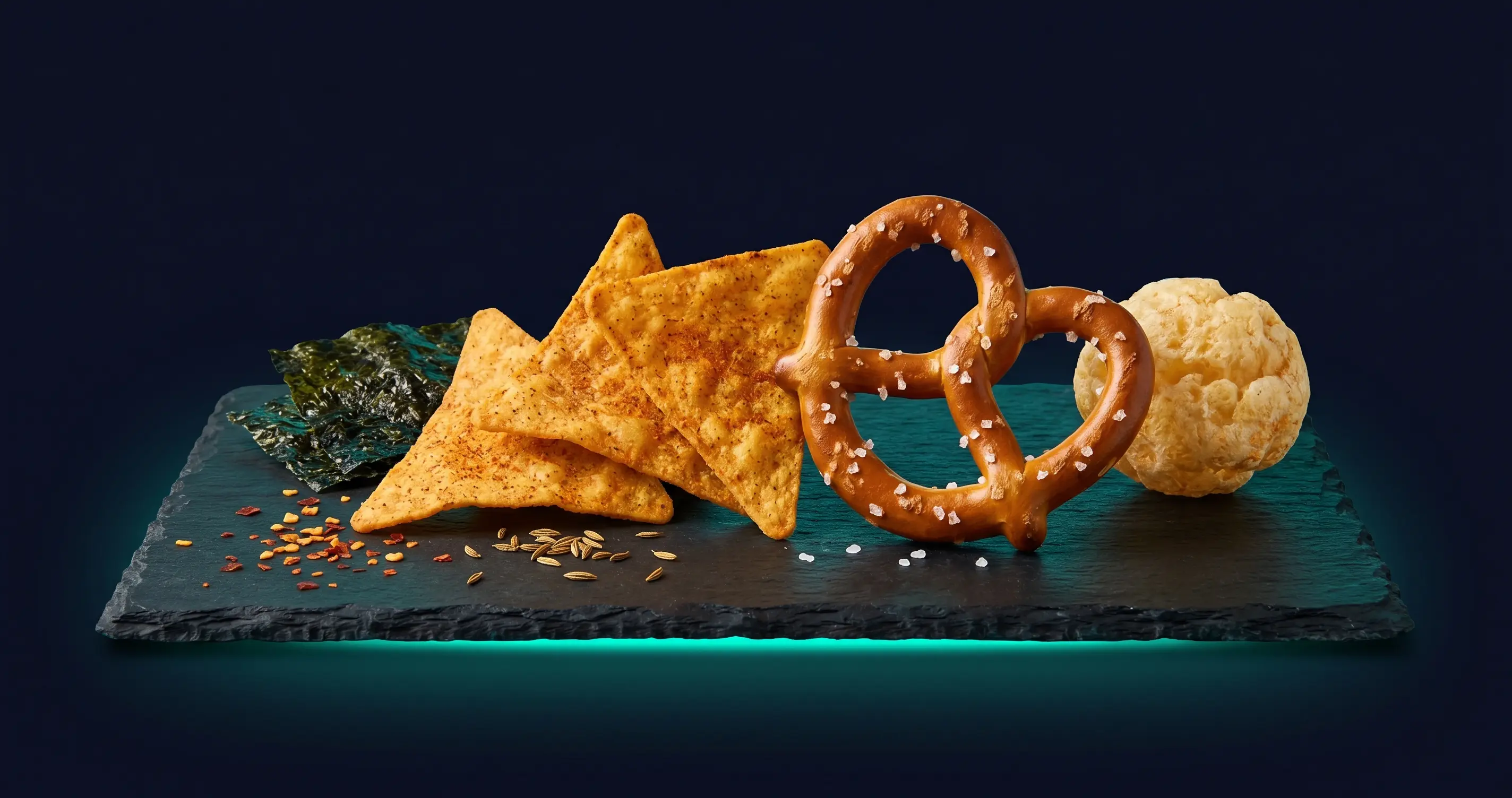
Protein snacks used to mean one thing: a chocolate-coated bar. Then came protein chips, and suddenly "Sour Cream & Onion" was a valid protein format. Now the category has gone fully off-script — you can get protein chips in Pizza, Loaded Taco, and Buffalo Ranch. There's a Japanese brand making actual chicken tenderloin bars in Consommé and Black Pepper. And someone decided Chicken & Waffles should be a protein chip flavour.
The question isn't whether these exist. It's whether they're any good nutritionally — or whether the wild flavour is masking weak macros. We checked every unusual flavour in our catalogue against the same five dimensions we score everything on. Some of the weirdest flavours in the aisle are also some of the highest-scoring products we track.
The savoury crisp explosion
Quest Nutrition has turned their tortilla chip line into a flavour laboratory. The standard crisp flavours (BBQ, Sour Cream & Onion) already rank in the top tier — but the adventurous ones score just as high:
| # | Product | XRay | P/100 kcal | kcal / 100 g | |
|---|---|---|---|---|---|
1 | 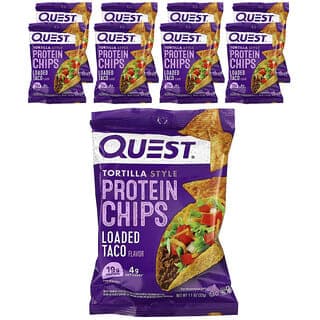 Quest Nutrition Tortilla Style Protein Chips, Loaded Taco | 84 | 13.6g | 437.5 | |
2 | 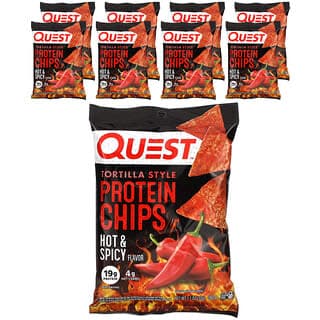 Quest Nutrition Tortilla Style Protein Chips, Hot & Spicy | 84 | 13.6g | 437.5 | |
3 | 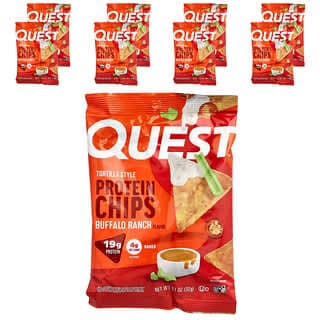 Quest Nutrition Tortilla Style Protein Chips, Buffalo Ranch | 82 | 13.6g | 437.5 | |
4 | 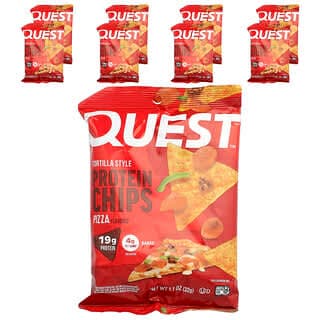 Quest Nutrition Tortilla Style Protein Chips, Pizza | 80 | 13.6g | 437.5 | |
5 | 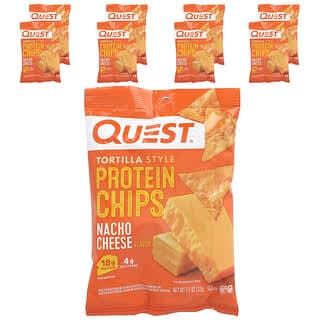 Quest Nutrition Tortilla Style Protein Chips, Nacho Cheese | 61 | 12.0g | 468.8 |
Loaded Taco and Hot & Spicy both score 87.3 at rank #3 among protein crisps. They deliver 59.38 g protein per 100 g and 13.57 g protein per 100 kcal — identical to the "boring" BBQ and Sour Cream & Onion flavours. The taco seasoning and spice blends add flavour complexity without adding meaningful calories or fat.
Pizza scores 81.0 at rank #10 — a small step down because it carries slightly more fat (15.62 g per 100 g vs 14.06 g for the top-tier flavours), but still firmly in the upper half of the crisp category.
Nacho Cheese drops further to 50.0 at rank #14 with 56.25 g protein per 100 g. The cheese flavouring adds enough fat (18.75 g per 100 g) to pull the efficiency ratio down to 12.00 g protein per 100 kcal. Still a high-protein snack by any standard — but the "cheesier" the flavour, the higher the calorie cost.
Japan's secret weapon: chicken tenderloin bars
The most unusual products in our catalogue come from Maruzen, a Japanese brand making PROFIT Chicken Tenderloin Protein Bars. These aren't "chicken-flavoured" anything — they're actual pressed chicken tenderloin in bar form, available in Black Pepper, Red Pepper, Mild Salt, and Consommé.
And they dominate the savoury snack category:
Black Pepper and Red Pepper both score 88.2 — rank #1 in the savoury snack category. They deliver 17.08 g protein per 100 g at just 106.15 kcal per 100 g, with 0.62 g fat. That gives them 16.09 g protein per 100 kcal — a ratio that most protein powders would envy.
Mild Salt scores 80.7 (rank #3) with nearly identical macros: 16.92 g protein per 100 g, 104.62 kcal, 0.46 g fat.
Consommé rounds out at 73.2 (rank #4) — slightly more fat (0.77 g) from the consommé flavouring, but still one of the leanest protein snacks in the entire catalogue.
| Metric | 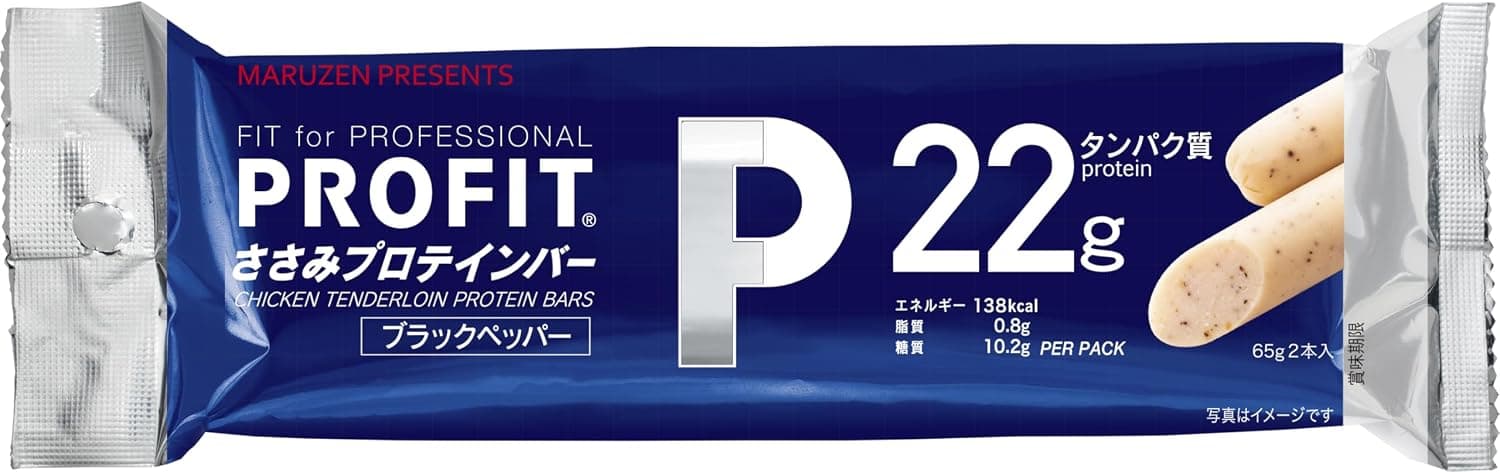 Side A Side A | Side B |
|---|---|---|
| Protein / 100 kcal | 16.1 g | 13.6 g |
| Protein / 100 g | 17.1 g | 59.4 g |
| Calories / 100 g | 106.2 kcal | 437.5 kcal |
| Fat / 100 g | 0.6 g | 15.6 g |
| Net carbs / 100 g | 7.8 g | 12.5 g |
| Fiber / 100 g | 0.3 g | 3.1 g |
| Sugar / 100 g | 7.8 g | — |
The Maruzen bars are fascinating because they invert the usual protein-snack formula. Most protein snacks achieve high protein density through whey or soy isolate. These achieve exceptional leanness through whole-food protein (chicken breast) that's naturally low in fat and carbohydrates. The protein per 100 g (17.08 g) looks modest next to a protein crisp's 59 g — but that's because the chicken retains its water content. The protein per 100 kcal (16.09 g) reveals the real story: you're spending very few calories on non-protein mass.
The wildcard: Chicken & Waffles chips
Wilde Brands makes protein chips from actual chicken breast — a whole-food approach similar to Maruzen but in chip form. Their most audacious flavour? Chicken & Waffles.
It scores 33.0 (rank #17 among crisps in our catalogue) with 34.21 g protein per 100 g and 6.19 g protein per 100 kcal. The chicken-breast base gives them a different nutritional profile from whey-based chips: more fat (34.21 g per 100 g) and higher calorie density (552.63 kcal per 100 g), but also meaningful fiber (7.89 g per 100 g).
Wilde's chips consistently score lower than Quest's whey-based crisps because the whole-food chicken + fat rendering process produces a denser, fattier chip. The flavour is a conversation starter; the macros are a trade-off. If you're optimising for protein efficiency, Quest wins. If you want a chip made from real chicken that actually tastes like chicken and waffles — Wilde is the only option.
Unusual flavors beyond chips
The adventurous flavour trend extends across snack formats:
Crisp Power Protein Pretzels in Everything and Sesame bring a savoury, bakery-adjacent profile to the pretzel format. Everything scores 91.6 (rank #2 among sweet snacks) with 52.91 g protein per 100 g and an exceptional 21.16 g fiber per 100 g. Sesame scores 88.0 (rank #4) with the same protein and fiber profile at slightly higher calories. These are among the few snacks that score well on both protein efficiency and fiber — a rare combination.
Twin Peaks Protein Puffs in Mesquite BBQ and Jalapeno Cheddar pack 70.00 g protein per 100 g — higher than any protein crisp — with scores of 85.2 (both rank #8 among sweet snacks). The puffed format achieves extreme protein density through a milk-protein extrusion process.
MusclePharm Combat Protein Powder in Horchata brings a Mexican-inspired cinnamon-rice-milk flavour to the shake aisle. It scores 51.6 (rank #75 among powders) with 69.44 g protein per 100 g. Mid-tier performance — the horchata flavouring adds enough sweetener to bump calories above the lean-isolate tier. But for anyone bored of chocolate and vanilla, it's a genuinely different flavour profile that still delivers solid protein density.
What this tells you about picking flavours
The pattern across every category is consistent: spice-based and seasoning-based flavours (taco, pepper, BBQ, hot & spicy) carry almost no macro penalty over plain flavours. Cheese-based and fat-based flavours (nacho, cheddar, ranch) do carry a cost — usually 15–30 fewer points on the XRay Score.
If you've been sticking to safe flavours because you assumed the unusual ones were nutritional compromises, the data doesn't support that fear. Some of the highest-scoring products in our catalogue have the strangest names on the shelf.