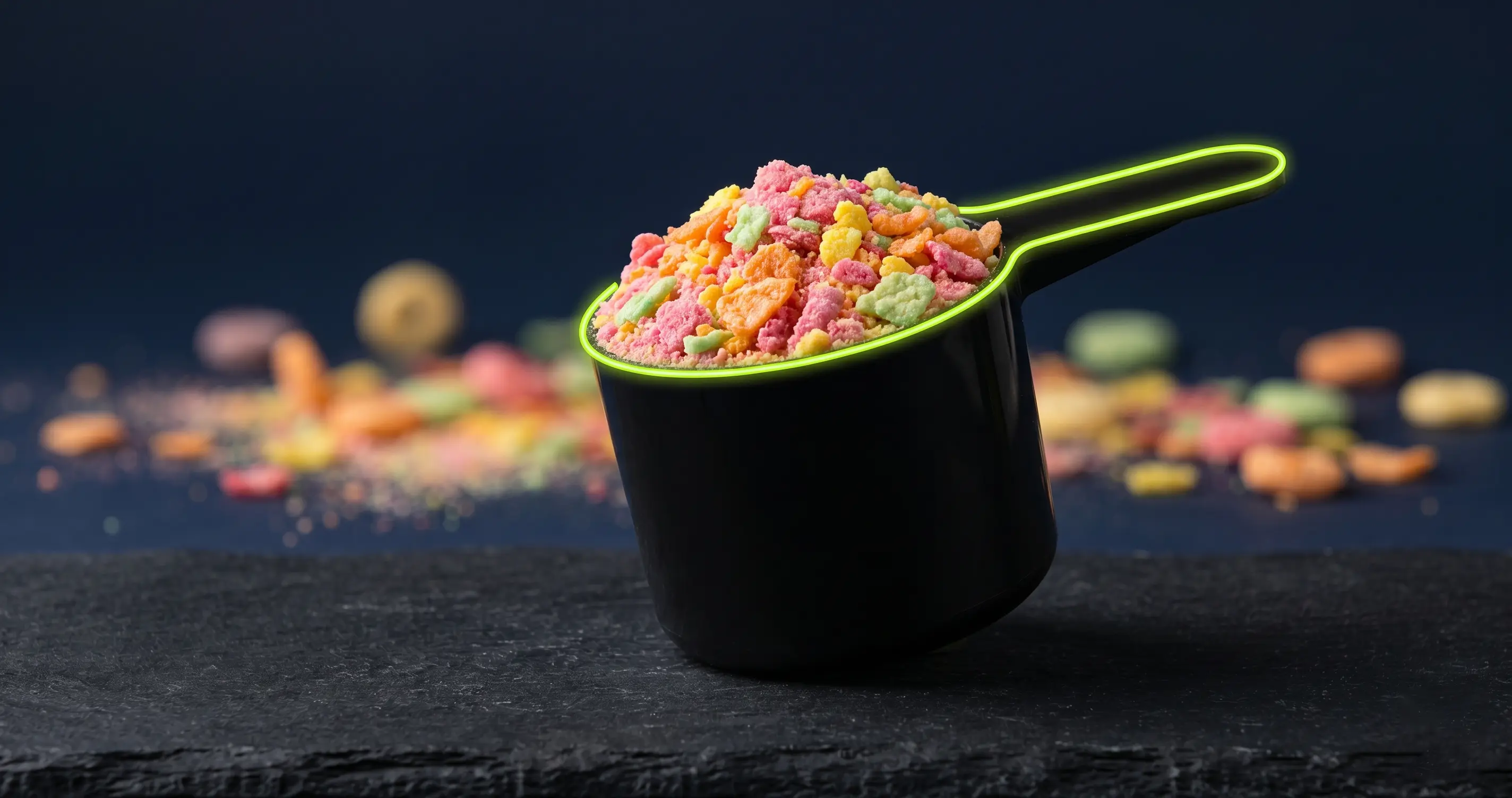
Protein powders named after breakfast cereal sound like they shouldn't work. Fruity Pebbles? Cocoa Pebbles? Birthday Cake Pebbles? These are the names you'd find in the candy aisle, not on a serious supplement shelf.
But here's the thing: Dymatize ISO100 Fruity Pebbles (3 lb) sits at rank #1 in our entire protein powder catalogue — over 120 products at the time of writing — with an XRay Score of 90.5. It delivers 83.33 g of protein per 100 g of powder at 366.67 kcal, zero fat, and 22.73 g of protein per 100 kcal. That's not "good for a collab flavour." That's the best protein powder we've scored, period.
The cereal collab trend isn't a gimmick. It's one of the most interesting developments in the protein market — and the data says these products punch well above their novelty-label weight class.
The Pebbles lineup, ranked
Dymatize has turned the Post Cereal collaboration into a full sub-brand. We track three Pebbles flavors across multiple tub sizes, and they dominate the upper rankings:
| # | Product | XRay | P/100 kcal | kcal / 100 g | |
|---|---|---|---|---|---|
1 | 78 | 20.8g | 400.0 | ||
2 | 85 | 22.7g | 366.7 | ||
3 | 80 | 20.8g | 375.0 | ||
4 | 78 | 20.8g | 400.0 | ||
5 | 78 | 20.8g | 400.0 |
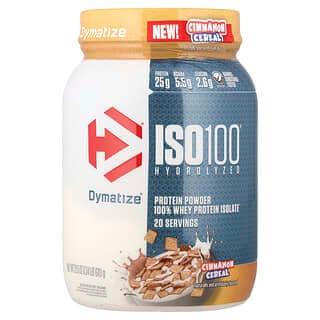
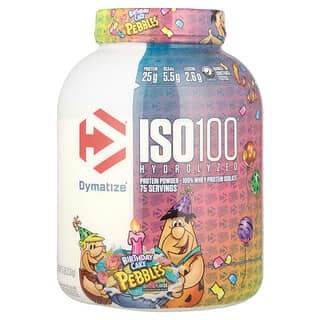
Fruity Pebbles (3 lb) leads the pack at rank #1 with a score of 90.5. Same protein per 100 g (83.33 g) across all Pebbles flavors — but the 3 lb Fruity Pebbles variant edges out its siblings on calorie density: 366.67 kcal per 100 g vs 400.00 kcal for the larger tubs. That lower calorie count pushes the protein-per-100-kcal ratio from 20.83 up to 22.73 — enough to separate a rank-#1 product from a rank-#27 product.
Cocoa Pebbles (3 lb) scores 81.5 at rank #14 with 78.12 g protein per 100 g. The slightly lower protein concentration vs Fruity Pebbles (78.12 vs 83.33) drops its efficiency ratio, but it's still comfortably in the top 15 out of 120+ powders we track.
Birthday Cake Pebbles (5 lb) matches the same protein as Fruity Pebbles (83.33 g per 100 g) but at 400 kcal per 100 g rather than 366.67 — landing at rank #27 with a score of 76.7.
Why cereal flavors score so well
The secret is that the Pebbles line sits on Dymatize's ISO100 platform — a hydrolyzed whey isolate with near-zero fat. The cereal flavoring is mostly artificial flavor compounds and sweeteners, which add taste without adding significant calories, fat, or carbs. The base protein matrix does the heavy lifting; the cereal branding is a flavor overlay, not a reformulation.
This is the opposite of what happens with, say, a cookies-and-cream protein bar, where the "cookies" component adds real cookie pieces — and with them, real fat and carbs. In powder form, the gap between "Fruity Pebbles" and "Gourmet Vanilla" is negligible in macros. The ISO100 Gourmet Vanilla (5 lb) scores 90.5 at rank #1 too, with identical protein per 100 g (83.33) and the same calorie density (366.67 kcal per 100 g).
The collab flavor doesn't cost you anything nutritionally. It just makes the scoop more fun.
| Metric | 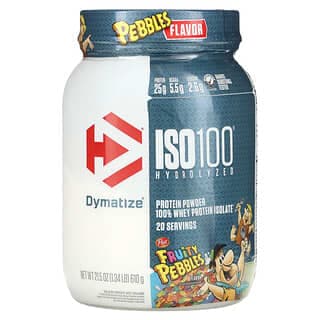 Side A Side A | 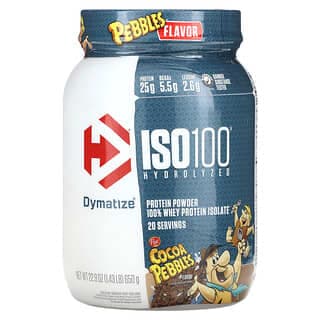 Side B Side B |
|---|---|---|
| Protein / 100 kcal | 20.8 g | 20.8 g |
| Protein / 100 g | 83.3 g | 78.1 g |
| Calories / 100 g | 400.0 kcal | 375.0 kcal |
| Fat / 100 g | 3.3 g | 3.1 g |
| Net carbs / 100 g | 6.7 g | 6.3 g |
| Fiber / 100 g | 0.0 g | 0.0 g |
| Sugar / 100 g | 3.3 g | 3.1 g |
The cereal-flavoured RTD
It's not just powders. Dymatize also makes a Performance Protein Shake in Cocoa Pebbles — a ready-to-drink version at 340 ml per bottle. It scores 60.8 (rank #10 among RTD shakes in our catalogue) with 8.56 g protein per 100 g and 18.74 g protein per 100 kcal.
That's a mid-tier RTD score — respectable, not exceptional. The liquid format carries more water weight, which drops the protein-per-100g number dramatically vs powder. But for grab-and-go convenience with a cereal-milk flavour profile, it sits in the top half of the RTD category.
Other nostalgia flavors in the catalogue
The cereal collab trend extends beyond Pebbles. Across our catalogue, several products lean into childhood-flavour territory:
Birthday Cake appears across bars, powders, and sweet snacks. The best performer is Quest Protein Bar Birthday Cake at rank #9 among bars with a score of 88.6 — it delivers 33.33 g protein per 100 g and 11.11 g protein per 100 kcal, making it one of the highest-scoring "fun flavour" bars in the catalogue.
Cookie Dough is a staple across bars. Quest's Chocolate Chip Cookie Dough bar scores 86.7 (rank #11 among bars) with 35.00 g protein per 100 g. The nostalgic flavour matches the original Quest bar's protein density — again, no macro penalty.
Cinnamon Cereal — Dymatize's non-collab take on the breakfast theme — scores 83.5 (rank #8) at the same 83.33 g protein per 100 g as the Pebbles line. If you want the cereal experience without the licensed branding, this is the sleeper pick.
What this means for picking a flavour
The broader lesson from the cereal-collab data is the same one we found in our Flavor Tax article: in protein powders, flavour rarely changes the macros. The exceptions are flavours that require calorie-dense ingredients (cocoa, peanut butter, real cookie pieces). Cereal-inspired flavours — which rely on artificial flavoring rather than real cereal — don't carry that penalty.
So if you've been avoiding the Pebbles tub because it looks like a novelty item, the numbers say otherwise. It's the same protein, the same efficiency, the same ranking position as the "serious" vanilla and chocolate options. The only difference is it tastes like your favourite cartoon cereal.