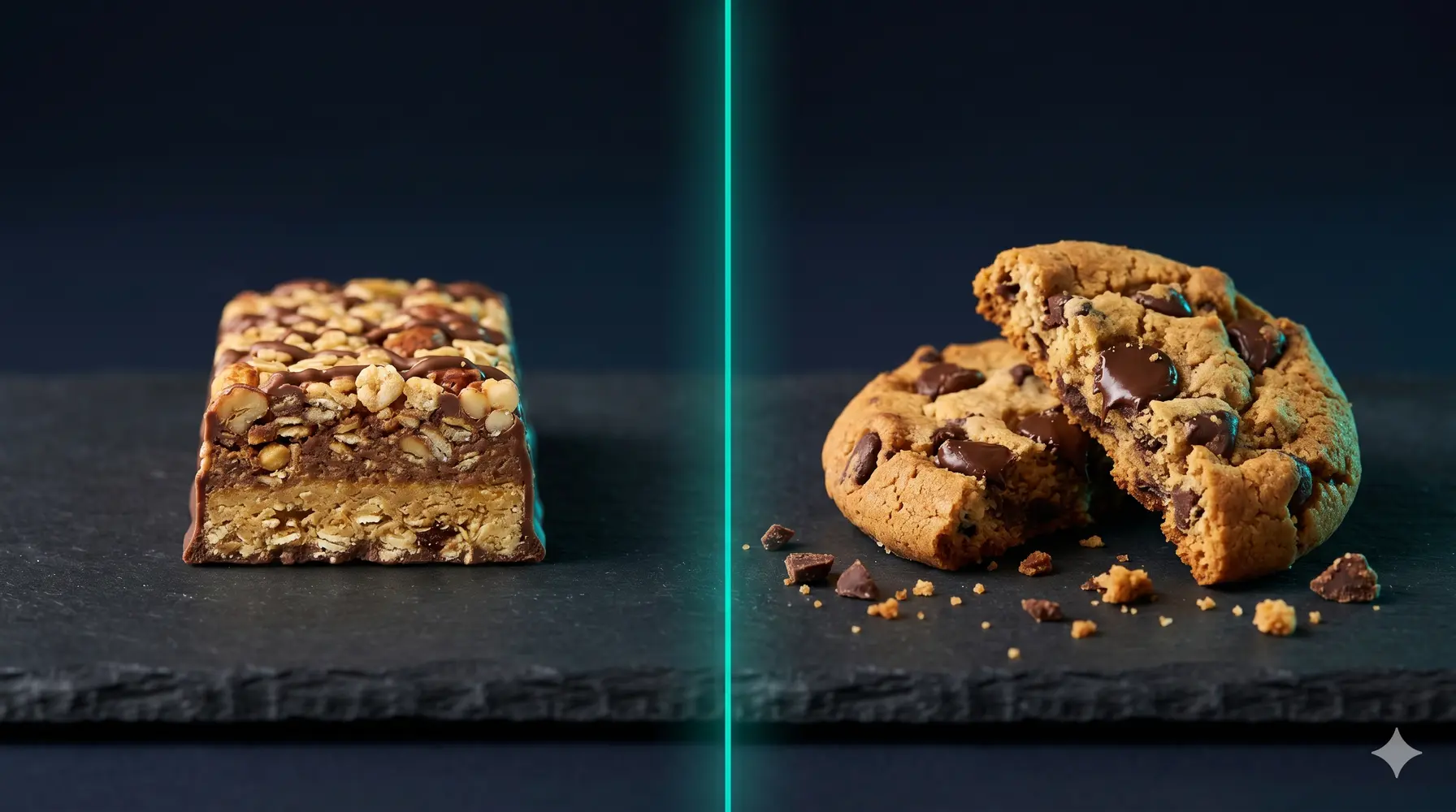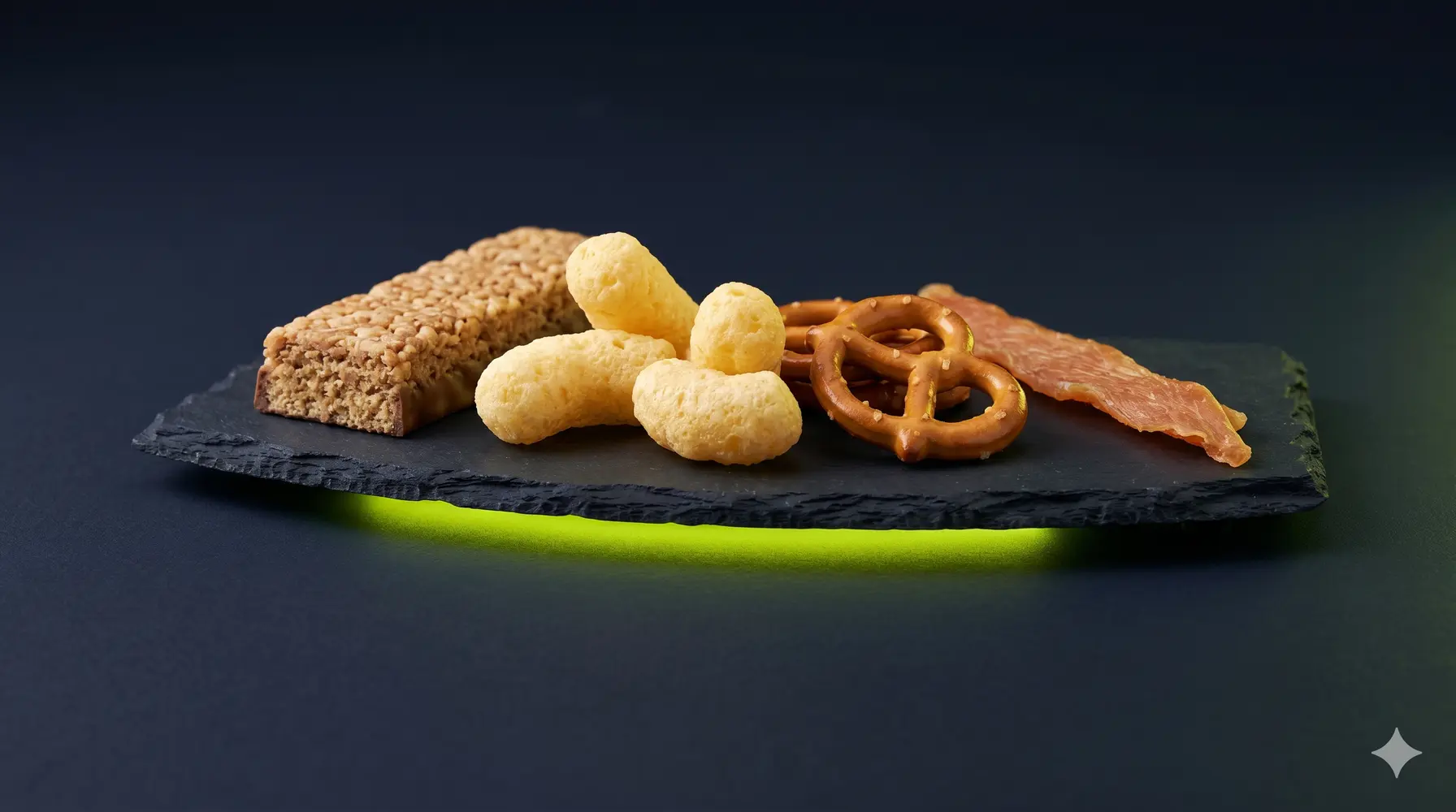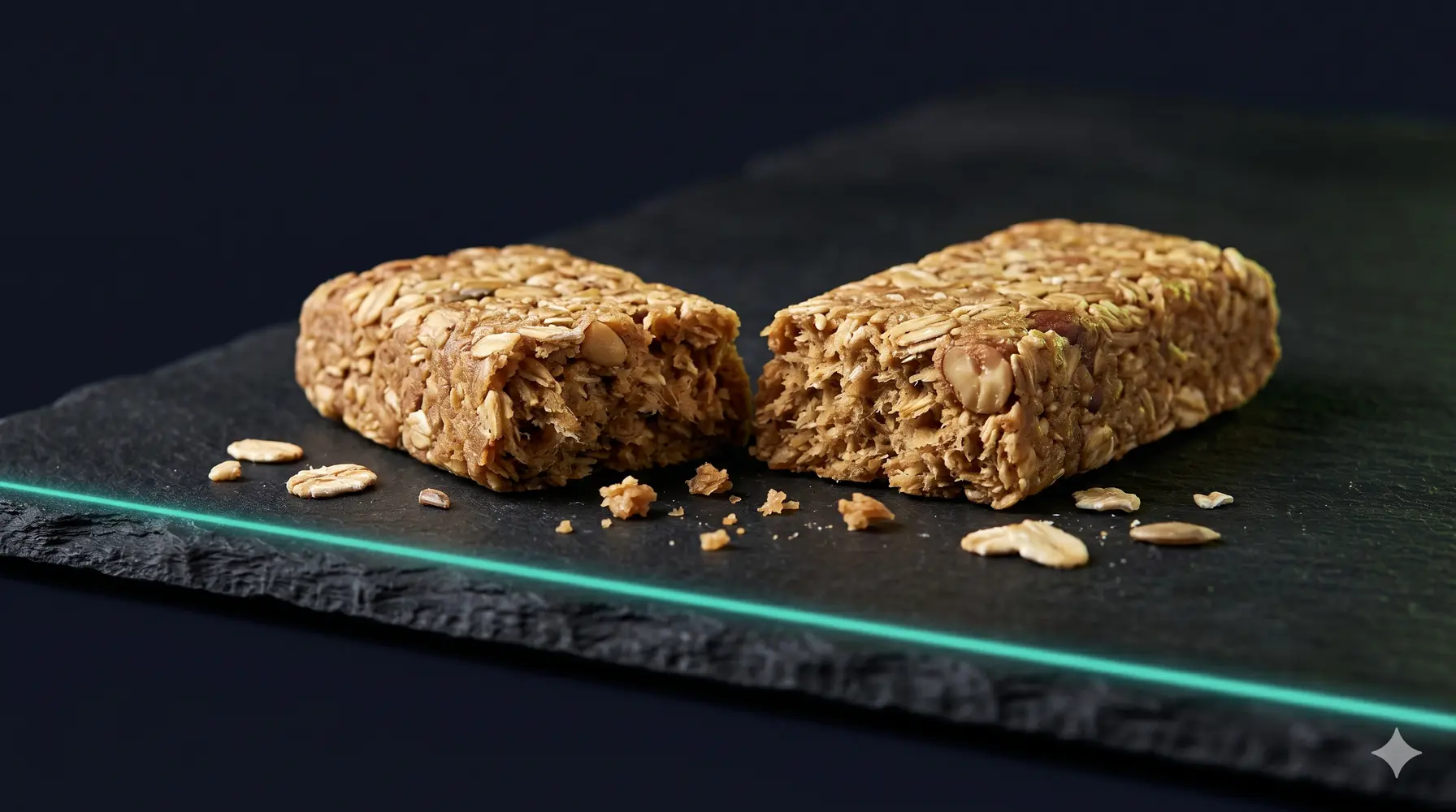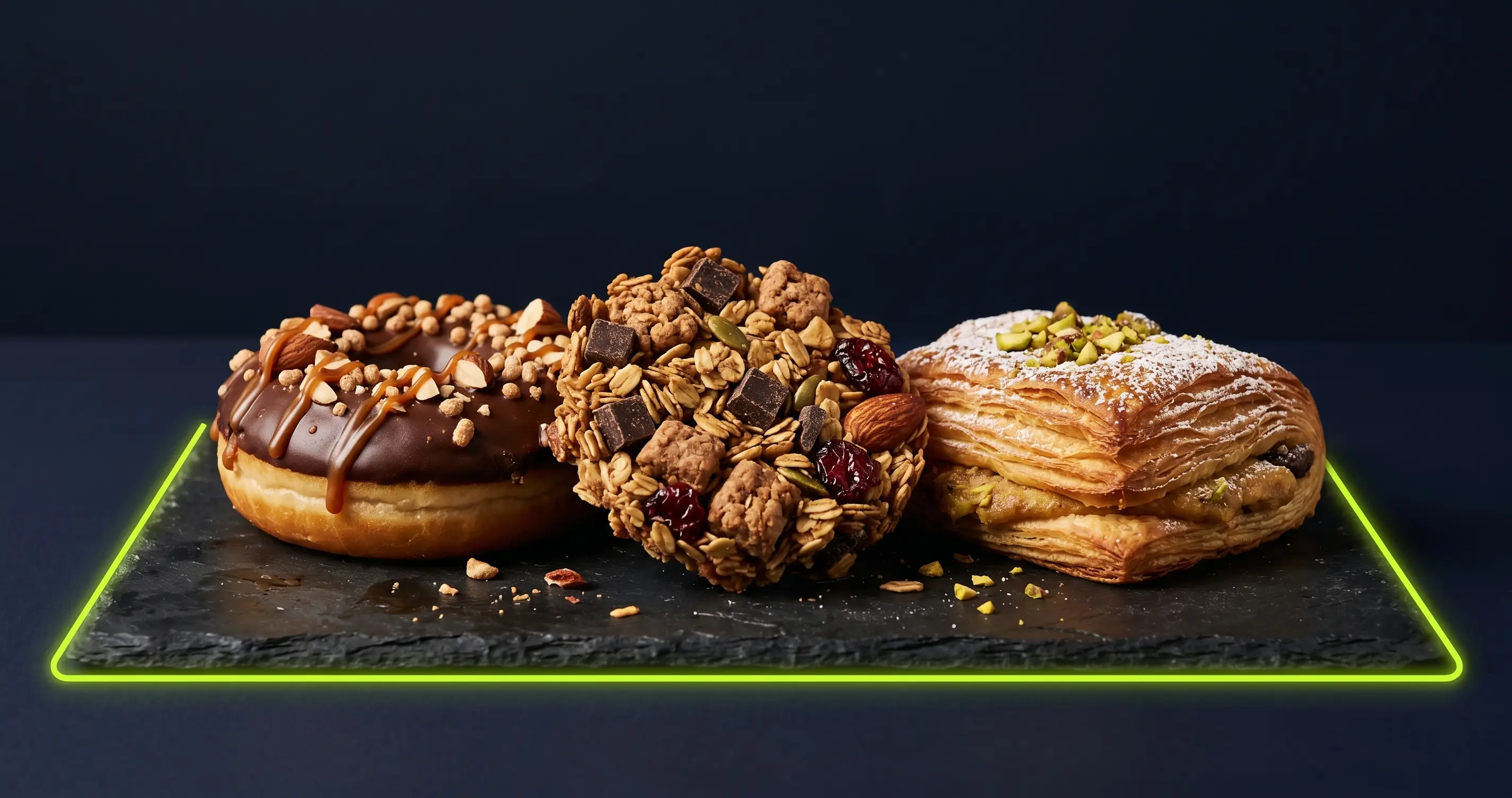
When people think "protein snack," they think bar. Maybe a shake. If they're adventurous, chips. But the protein snack category has quietly expanded into territory that looks nothing like a supplement aisle — and some of these formats outperform the bars most people default to.
We track over 80 products in our sweet snack category. That includes protein donuts, granola clusters, pastries, sweet rolls, cookies, brownies, puffs, and pretzels. Over half of them score above the average protein bar's XRay Score of 52.1. The best sweet snack — Crisp Power Protein Pretzels Sea Salt — scores 93.5, higher than all but one protein bar in our entire catalogue.
This is the tour of the protein snack aisle you didn't know you needed.
Protein donuts — yes, really
Legendary Foods makes a line of protein donuts that reads like a bakery menu: Cinnamon Crumble, Pink Sprinkle, Chocolate Dipped, Vanilla Glazed. They sound like cheat-day treats. They score like legitimate protein snacks.
Cinnamon Crumble leads at 76.0 (rank #19 among sweet snacks) with 31.75 g protein per 100 g, 12.70 g fiber, and just 253.97 kcal per 100 g. That calorie density is lower than most protein bars — you're getting more protein per calorie from this donut than from many bars on the shelf.
Pink Sprinkle scores 73.4 (rank #21) with 32.26 g protein per 100 g. Chocolate Dipped hits 72.2 (rank #22) with the highest protein concentration of the lineup at 32.79 g per 100 g. Vanilla Glazed rounds out at 71.7 (rank #23) with the lowest calorie density in the range — 246.15 kcal per 100 g.
All four Legendary Foods donuts score above the average protein bar (52.1). A protein donut that beats most protein bars. That sentence shouldn't make sense, but the data is clear.
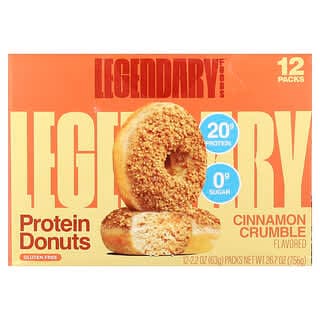
What makes the calorie density stand out: most protein bars sit at 300–430 kcal per 100 g. Legendary's donuts and pastries land under 260. That gap gives you meaningfully more room in your daily budget — and it's the main reason these bakery formats beat bars on protein-per-calorie efficiency.
Julian Bakery ProGranola — the fiber anomaly
Julian Bakery's ProGranola Clusters are the most unusual nutritional profile in our entire catalogue. The Espresso flavor delivers 33.33 g protein per 100 g alongside 40.00 g fiber per 100 g. That's not a typo — forty grams of fiber per hundred grams of product. For context, most protein bars carry 15–25 g of fiber per 100 g. Most protein crisps carry 3 g.
The Espresso variant scores 85.8 (rank #7) among sweet snacks. Vanilla Cinnamon scores even higher at 88.1 (rank #3) with 36.67 g protein and 36.67 g fiber per 100 g. The Vegan Vanilla variant matches the fiber (40.00 g per 100 g) at a score of 84.9 (rank #10).
| # | Product | XRay | P/100 kcal | kcal / 100 g | |
|---|---|---|---|---|---|
1 | 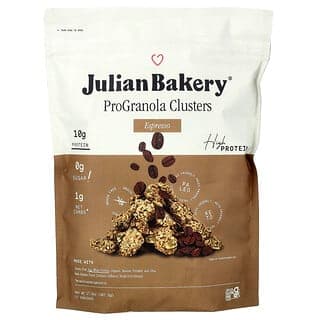 Julian Bakery ProGranola Clusters, Espresso | 90 | 10.0g | 333.3 | |
2 | 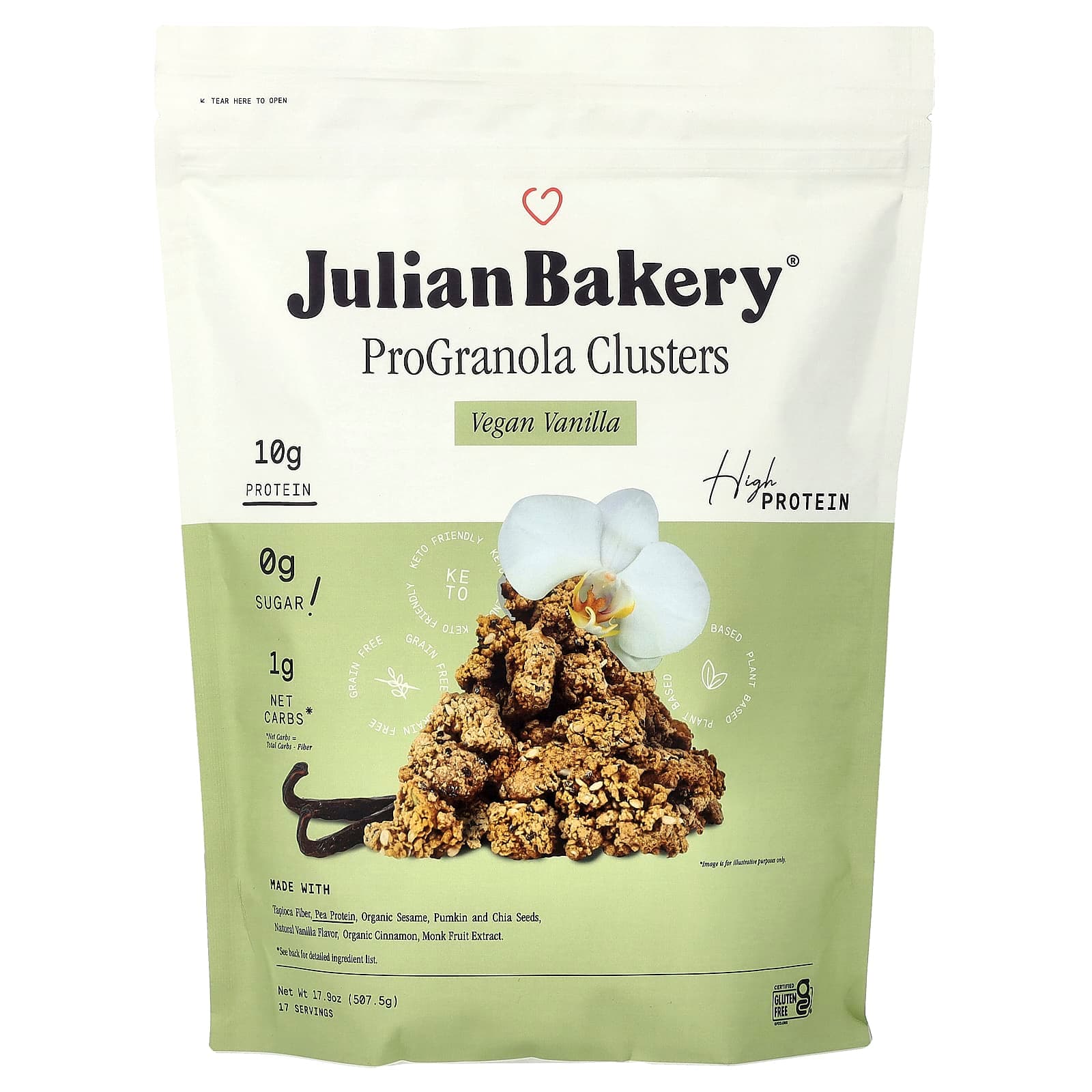 Julian Bakery ProGranola Clusters, Vegan Vanilla | 89 | 10.0g | 333.3 | |
3 |  Julian Bakery ProGranola Clusters, Vanilla Cinnamon | 91 | 11.0g | 333.3 | |
4 | 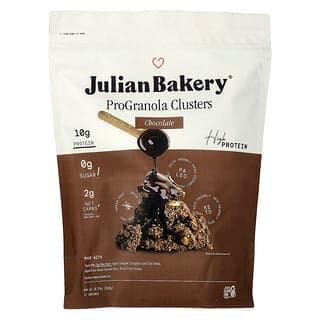 Julian Bakery ProGranola Clusters, Chocolate | 88 | 10.0g | 333.3 | |
5 | 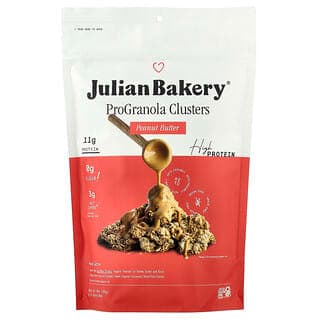 Julian Bakery ProGranola Clusters, Peanut Butter | 85 | 9.2g | 400.0 |
What makes ProGranola score so well is the double hit: high protein AND high fiber in a single product. Our XRay Score rewards both dimensions independently. Most snacks excel at one or the other — protein crisps deliver protein but almost no fiber; some fiber bars deliver fiber but modest protein. ProGranola does both.
One practical note: at 40 g fiber per 100 g, even a modest 50 g serving delivers 20 g of fiber — close to the daily recommended intake for many adults. If you're not used to high-fiber foods, start with a small handful and work up. Your gut will thank you.
Protein pastries and sweet rolls
Legendary Foods doesn't stop at donuts. Their pastry and sweet roll lines bring breakfast-counter formats to the protein aisle:
Protein Pastries in Brown Sugar Cinnamon, Strawberry, and Chocolate Cake all score 64.4–64.9 (ranks #26–28) with 32.79 g protein per 100 g and 14.75 g fiber at just 295.08 kcal per 100 g. The Blueberry variant scores 62.6 (rank #30) with slightly less fiber (13.11 g). These are essentially protein-enriched Pop-Tarts with macros that put them solidly in the top half of the sweet snack category.
Protein Sweet Rolls — Cinnamon scores 66.9 (rank #24) with 31.75 g protein per 100 g. Caramel Sticky Bun scores 64.0 (rank #29) with the added bonus of 15.38 g fiber per 100 g.
| Metric | Side A | 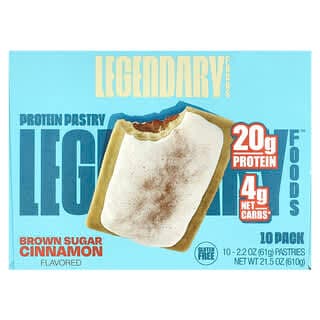 Side B Side B |
|---|---|---|
| Protein / 100 kcal | 12.5 g | 11.1 g |
| Protein / 100 g | 31.8 g | 32.8 g |
| Calories / 100 g | 254.0 kcal | 295.1 kcal |
| Fat / 100 g | 9.5 g | 14.8 g |
| Net carbs / 100 g | — | 21.3 g |
| Fiber / 100 g | 12.7 g | 14.8 g |
| Sugar / 100 g | 0.0 g | 0.0 g |
The format map — what scores where
Across our sweet snack catalogue, the formats separate into clear performance tiers:
Top tier (scores 80–93): Protein pretzels (Crisp Power) and granola clusters (Julian Bakery). Pretzels dominate on protein density (50–56 g per 100 g) with strong fiber (18–21 g). Granola leads on extreme fiber (36–40 g per 100 g) with solid protein (33–37 g). Puffs (Twin Peaks) land here too with the highest raw protein density of any snack format — 70 g per 100 g.
Mid tier (scores 60–79): Protein donuts, pastries, sweet rolls (all Legendary Foods). These earn their scores through unusually low calorie density (246–317 kcal per 100 g) combined with 30+ g protein per 100 g. The bakery formats beat most bars on protein-per-calorie efficiency.
Lower tier (scores 30–59): Protein cookies (Quest, My Cookie Dealer), brownies (Quest Bake Shop), and confections (Atkins Endulge). Cookies average around 25 g protein per 100 g at 360–445 kcal — decent protein, but the higher fat and calorie content pulls scores down. Confections (truffles, peanut butter cups, caramel clusters) score lowest — they're treats first, protein sources second.
What this means for your snack rotation
If your "protein snack" vocabulary starts and ends with bars, you're missing a category that's 80+ products deep and growing. Protein donuts that score higher than average bars. Granola with more fiber per gram than dedicated fiber supplements. Pastries with better protein-per-calorie ratios than many shakes.
The bar format isn't going anywhere — it's convenient, portable, and well-understood. But the next time you're scanning the aisle for something different, look past the bar section. The formats that sound least like "protein supplements" might be the ones that deliver the most.