Most people pick their protein powder flavor the way they pick ice cream: what sounds good. Chocolate Mint, Cookies & Cream, Mocha Cappuccino — the name sells the scoop. What almost nobody checks is whether the macros change with the flavor.
They do. And the differences are bigger than you'd think.
We compared every flavor of the same product, at the same size, across the MacroXray catalogue. Within a single product line — same brand, same tub, same label design — switching flavors can move your XRay Score by 23 points in a protein powder and 57 points in a protein bar. That's not noise. That's the difference between a top-quartile product and a bottom-half one.
Case study: ON Gold Standard Whey — 23 points of flavor spread
Optimum Nutrition's Gold Standard Whey is one of the most popular protein powders in the world. In our catalogue it appears in over a dozen flavors at roughly the same 5 lb tub size. Every flavor delivers the same 77.42 g of protein per 100 g. You'd think the scores would be identical. They aren't.
Delicious Strawberry scores 73.2 (rank #34). Calories: 387.10 per 100 g. Fat: 4.84 g. Protein per 100 kcal: 20.00 g.
Mocha Cappuccino scores 50.3 (rank #82). Calories: 406.25 per 100 g. Fat: 6.25 g. Protein per 100 kcal: 18.46 g.
Same protein concentration. But Mocha Cappuccino carries 19 more kcal and 1.41 g more fat per 100 g — enough to drop the protein-per-100-kcal ratio from 20.00 to 18.46 and pull the score down by nearly 23 points.
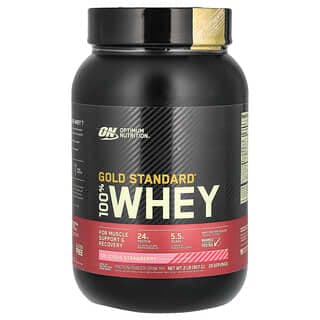
| Metric | Side A | 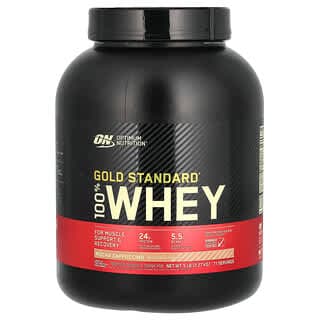 Side B Side B |
|---|---|---|
| Protein / 100 kcal | 20.0 g | 18.5 g |
| Protein / 100 g | 77.4 g | 75.0 g |
| Calories / 100 g | 387.1 kcal | 406.3 kcal |
| Fat / 100 g | 4.8 g | 6.3 g |
| Net carbs / 100 g | 9.7 g | — |
| Fiber / 100 g | 0.0 g | — |
| Sugar / 100 g | 6.5 g | 3.1 g |
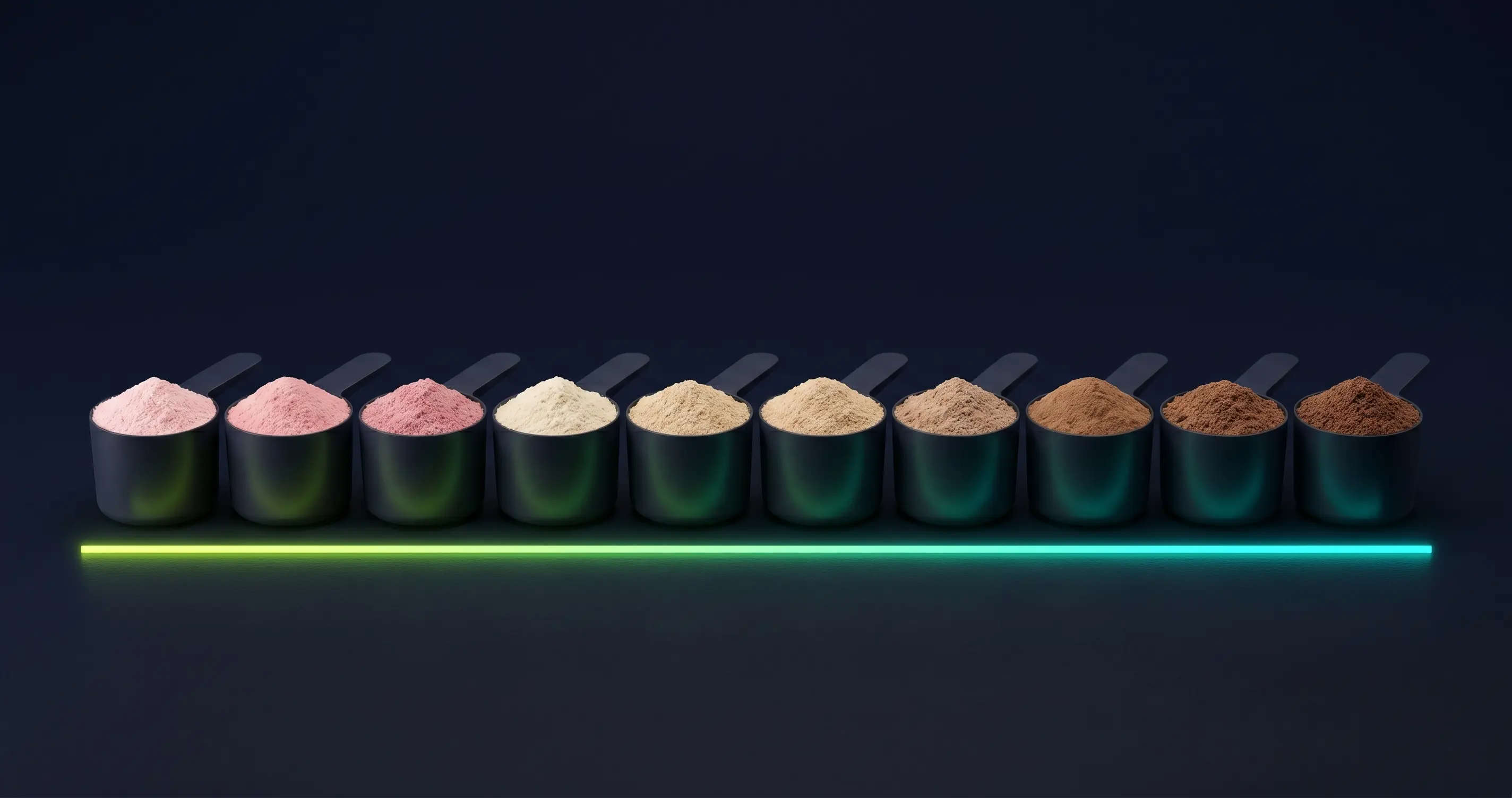
The flavors split into two clear tiers:
Tier 1 — 20.00 g protein per 100 kcal (scores 65–73): Delicious Strawberry, White Chocolate, Rocky Road, Strawberries & Cream, Double Rich Chocolate, French Vanilla Crème, Vanilla Ice Cream, Cookies & Cream.
Tier 2 — 18.46 g protein per 100 kcal (scores 50–65): Chocolate Malt, Banana Cream, Coffee, Chocolate Coconut, Chocolate Mint, Mocha Cappuccino.
The Tier 2 flavors aren't bad products. But they carry more calories per gram of powder, which means you're spending more of your daily calorie budget on the same amount of protein.
| # | Product | XRay | P/100 kcal | kcal / 100 g | |
|---|---|---|---|---|---|
1 | Optimum Nutrition Gold Standard® 100% Whey, Delicious Strawberry | 66 | 20.0g | 387.1 | |
2 | 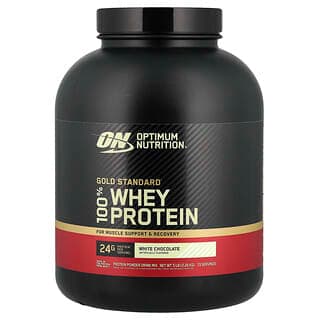 Optimum Nutrition Gold Standard® 100% Whey Protein | 71 | 20.0g | 387.1 | |
3 | 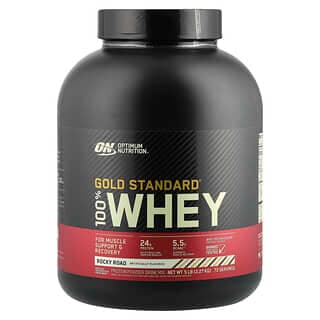 Optimum Nutrition Gold Standard® 100% Whey, Rocky Road | 70 | 20.0g | 380.9 | |
4 | 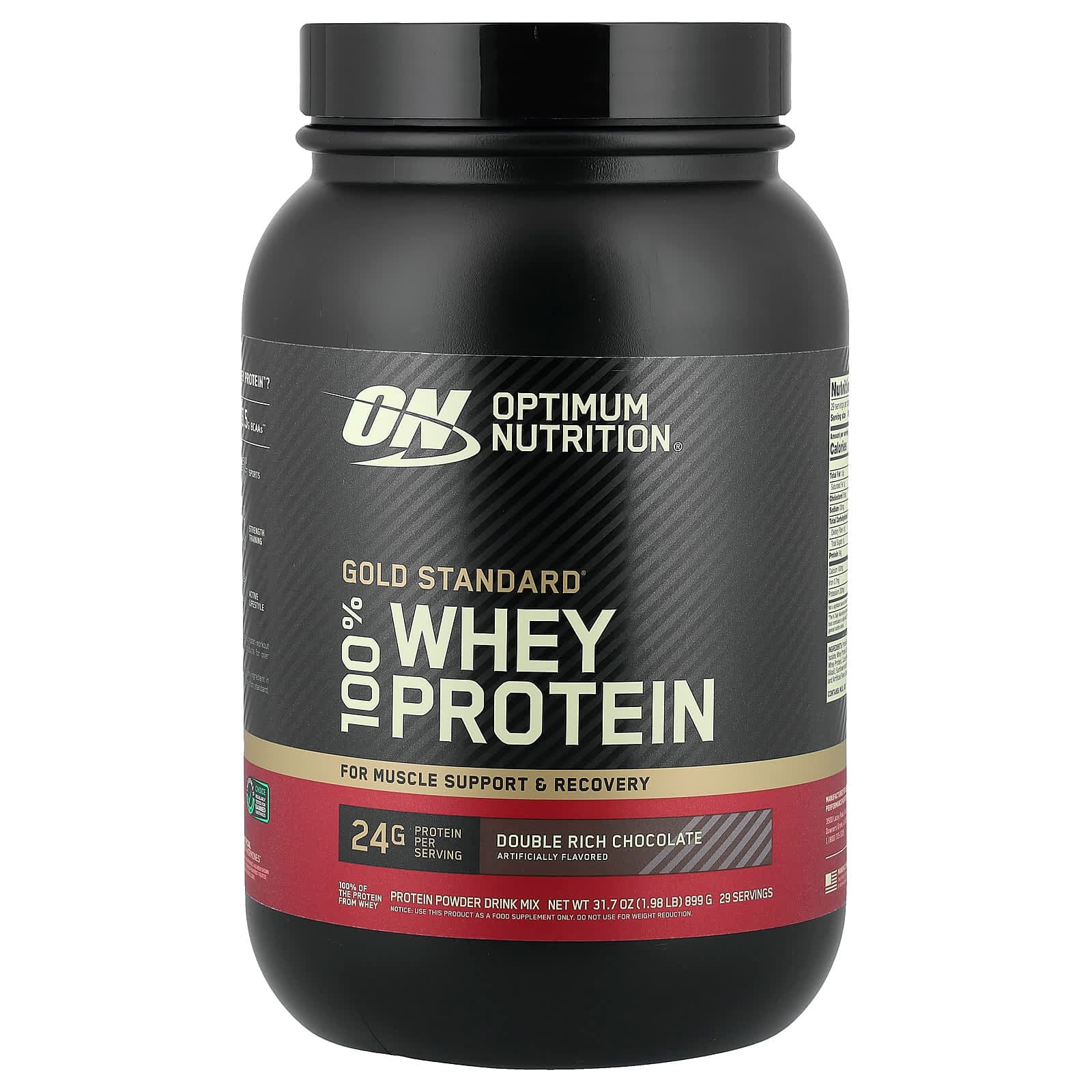 Optimum Nutrition Gold Standard® 100% Whey Protein, Double Rich Chocolate | 66 | 20.0g | 387.1 | |
5 |  Optimum Nutrition Gold Standard® 100% Whey, Chocolate Malt | 57 | 18.5g | 419.4 | |
6 | Optimum Nutrition Gold Standard® 100% Whey, Mocha Cappuccino | 50 | 18.5g | 406.3 |
Case study: Dymatize ISO100 — 19 points across flavors
Even in a premium isolate line, the flavor tax shows up. Across similar-sized ISO100 tubs (~1.3–1.5 lb):
Cinnamon Cereal scores 83.5 (rank #8). 366.67 kcal per 100 g. Protein per 100 kcal: 22.73 g.
Dunkin' Mocha Latte scores 64.5 (rank #50). 375.00 kcal per 100 g. Protein per 100 kcal: 20.83 g.
The gap is smaller than ON's — 19 points instead of 23 — partly because ISO100's baseline is already so lean. But it's still the difference between rank #8 and rank #50. If you're choosing between Cinnamon Cereal and Mocha Latte, the cereal flavor delivers the same protein with fewer calories.
| Metric |  Side A Side A |  Side B Side B |
|---|---|---|
| Protein / 100 kcal | 22.7 g | 20.8 g |
| Protein / 100 g | 83.3 g | 78.1 g |
| Calories / 100 g | 366.7 kcal | 375.0 kcal |
| Fat / 100 g | 3.3 g | 1.6 g |
| Net carbs / 100 g | 6.7 g | 9.4 g |
| Fiber / 100 g | 0.0 g | 0.0 g |
| Sugar / 100 g | 3.3 g | — |
Case study: Quest Bars — a 57-point chasm
The widest flavor tax we found is in Quest's protein bar range: 57.6 points between the best and worst flavors.
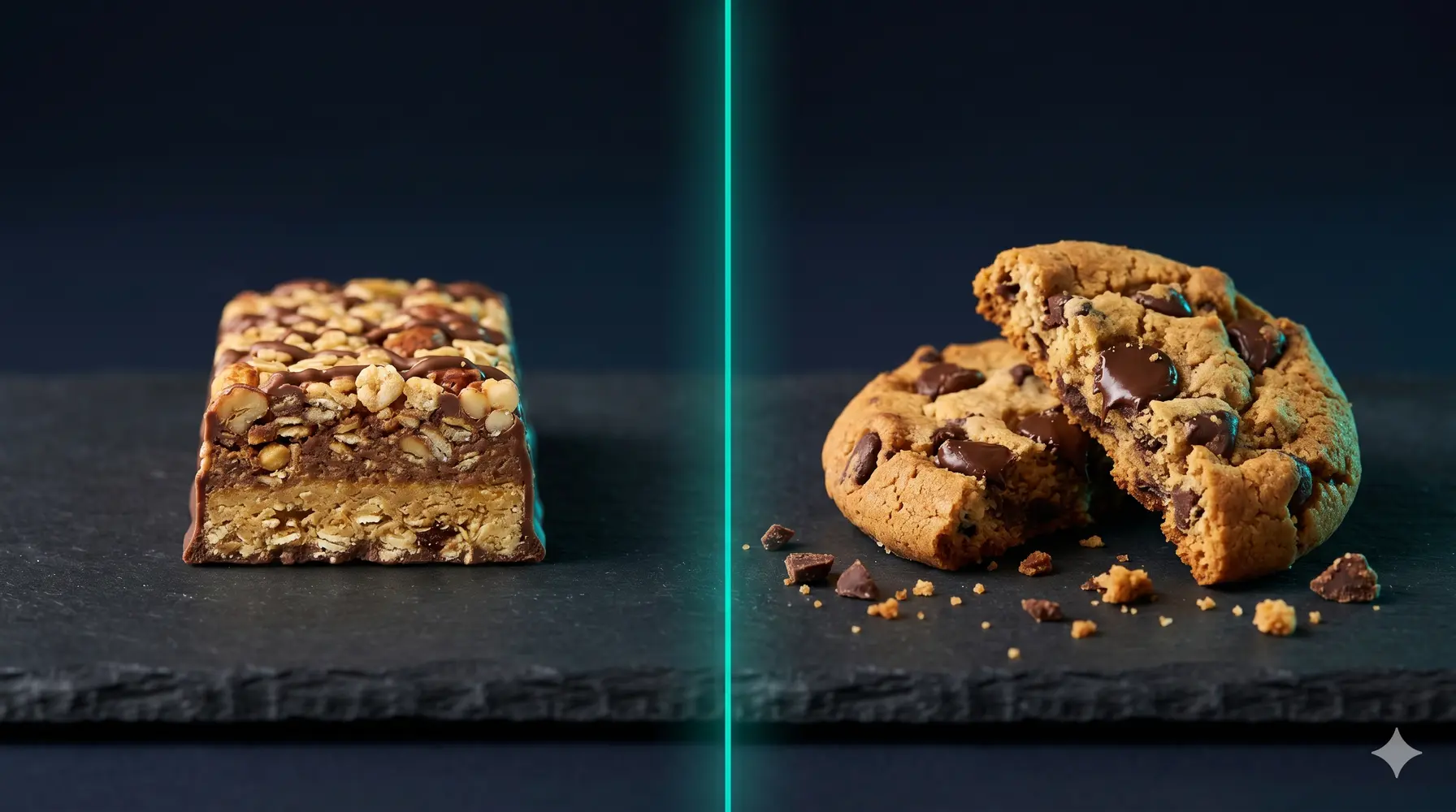
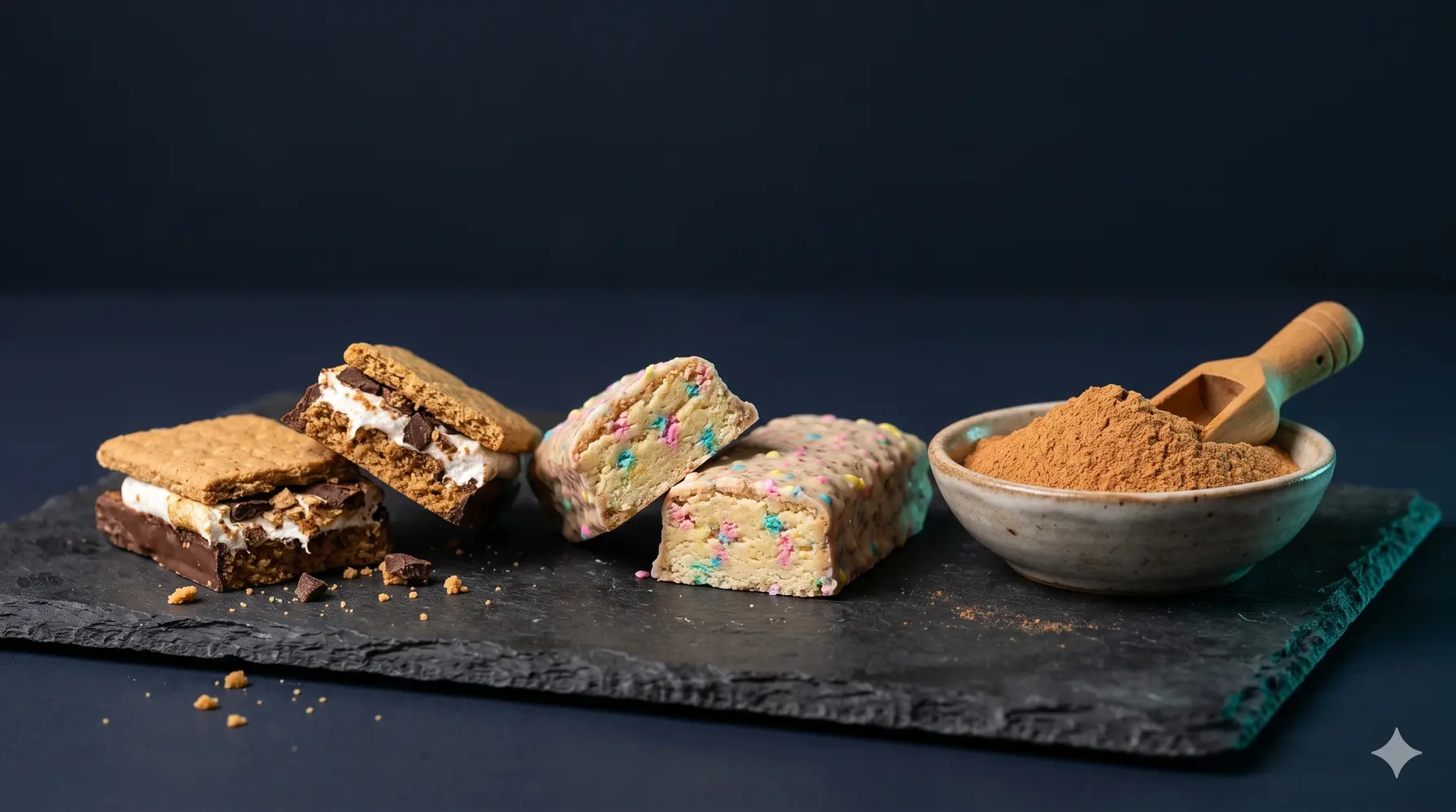
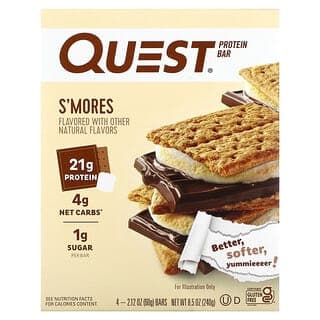
S'Mores scores 93.9 (rank #1 among bars). 300 kcal per 100 g. Fat: 11.67 g. Fiber: 21.67 g. Protein: 35.00 g per 100 g.
Crispy Peanut Butter & Jelly scores 36.3 (rank #69 among bars). 350 kcal per 100 g. Fat: 21.67 g. Fiber: 11.67 g. Protein: 26.67 g per 100 g.
The gap here is dramatic because the "Crispy" sub-line is a fundamentally different formulation — more fat, less fiber, less protein per gram. But they sit on the same shelf under the same Quest brand. If you're grabbing whatever Quest bar is closest, you might be picking a product that scores less than half as well as the one next to it.
Why flavors have different macros
It comes down to what creates the flavor. A strawberry or vanilla powder needs minimal extra ingredients — the flavoring itself is lightweight. A cookies-and-cream or chocolate-peanut-butter flavor often requires real cocoa powder (adds calories), cookie pieces (adds carbs and fat), or nut-based flavoring (adds fat). These additions don't change the protein content much, but they push up the total calorie count — and that drops the protein-per-calorie ratio.
In bars, the effect is amplified. A "crispy" or "layered" texture means additional fat for binding and crunch. A peanut butter filling adds density. Each textural choice shifts the macros further from pure protein delivery.
What to do with this
You don't need to sacrifice flavor for macros — but you should make the trade-off consciously. Next time you're choosing between two flavors of the same product, check the nutrition label or look up both on MacroXray. If one scores 15+ points higher than the other, the "boring" flavor is doing meaningfully more work per calorie.
And if your current favorite flavor happens to be a high scorer? Even better — keep going.