"Sugar-free" is not a synonym for healthy. Some of the lowest-scoring bars in our database are technically sugar-free — they just swap sugar for fat and filler, ending up with a mediocre macro profile in either direction. The label alone means nothing.
But here's something the data shows clearly: the best-ranked protein bars in our catalogue of over 430 products happen to have near-zero sugar. The top two overall — David bars — have 0 g of sugar per 100 g. The bars in rank #7 through #25 from Quest are at 1.67 g. The Benope bars, ranking #8–#20, come in at 1.67–3.33 g. Not because they're marketed as sugar-free. Because the formula that maximises protein and minimises fat and carbs doesn't have room for sugar.
MacroXray may earn a commission on some links in this article at no extra cost to you. Full disclosure.
Why the best bars are sugar-free anyway
Protein bars use sweeteners to hit a palatable taste while keeping sugar low. The highest-ranked bars in our database use sucralose or erythritol almost universally — and the reason is simple: both let you achieve dessert-level sweetness without burning macros on empty calories.
David bars push this further than anyone. At 45.16 g of protein per 100 g, 0 g sugar, 3.23 g fat, and just 241.94 kcal per 100 g, they've stripped the formula to the point where there's nothing left but protein, fiber, and a small amount of net carbs. They're the #1 and #2 ranked bars in the entire catalogue, and they taste like dessert.
The ranking
| # | Product | XRay | P/100 kcal | kcal / 100 g | Buy | |
|---|---|---|---|---|---|---|
1 | 97 | 18.7g | 241.9 | Buy | ||
2 | 96 | 18.7g | 241.9 | Buy | ||
3 | 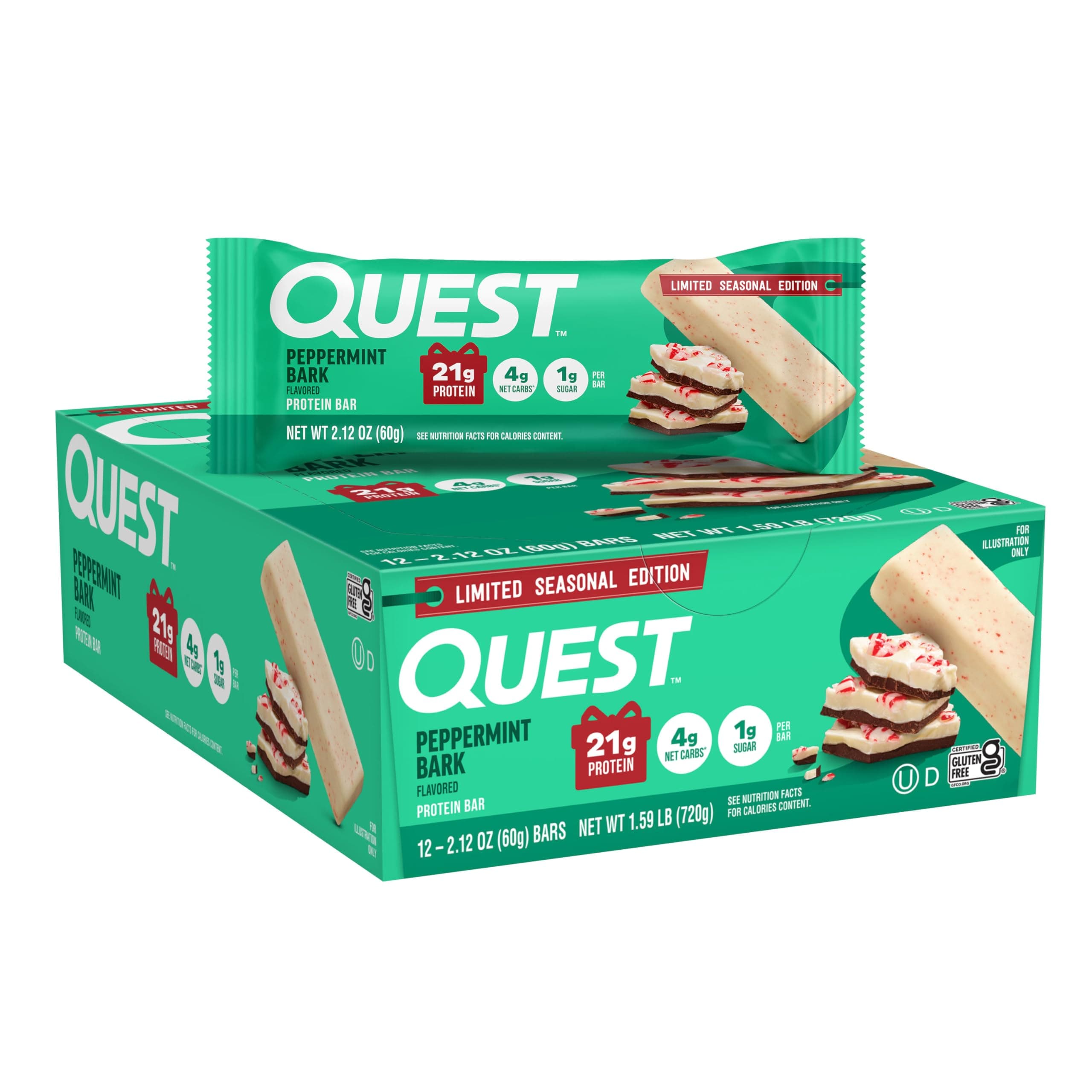 Quest Nutrition Quest Protein Bar (Peppermint Bark) | 90 | 11.7g | 300.0 | ||
4 | 89 | 11.1g | 300.0 | Buy | ||
5 |  Quest Nutrition Protein Bar, Chocolate Brownie | 89 | 11.8g | 283.3 | Buy | |
6 | 89 | 11.1g | 300.0 | Buy | ||
7 |  Quest Nutrition Protein Bar, S'Mores | 89 | 11.7g | 300.0 | Buy | |
8 |  Quest Nutrition Protein Bar, Double Chocolate Chunk | 84 | 11.8g | 283.3 | Buy | |
9 | 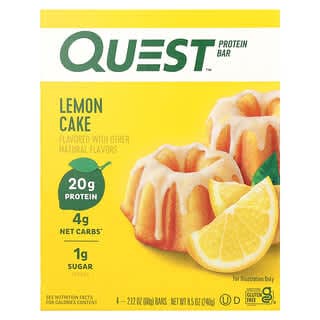 Quest Nutrition Protein Bar, Lemon Cake | 84 | 11.1g | 300.0 | Buy | |
10 | 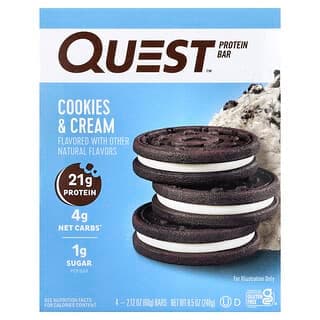 Quest Nutrition Protein Bar, Cookies & Cream | 86 | 11.1g | 316.7 | Buy |
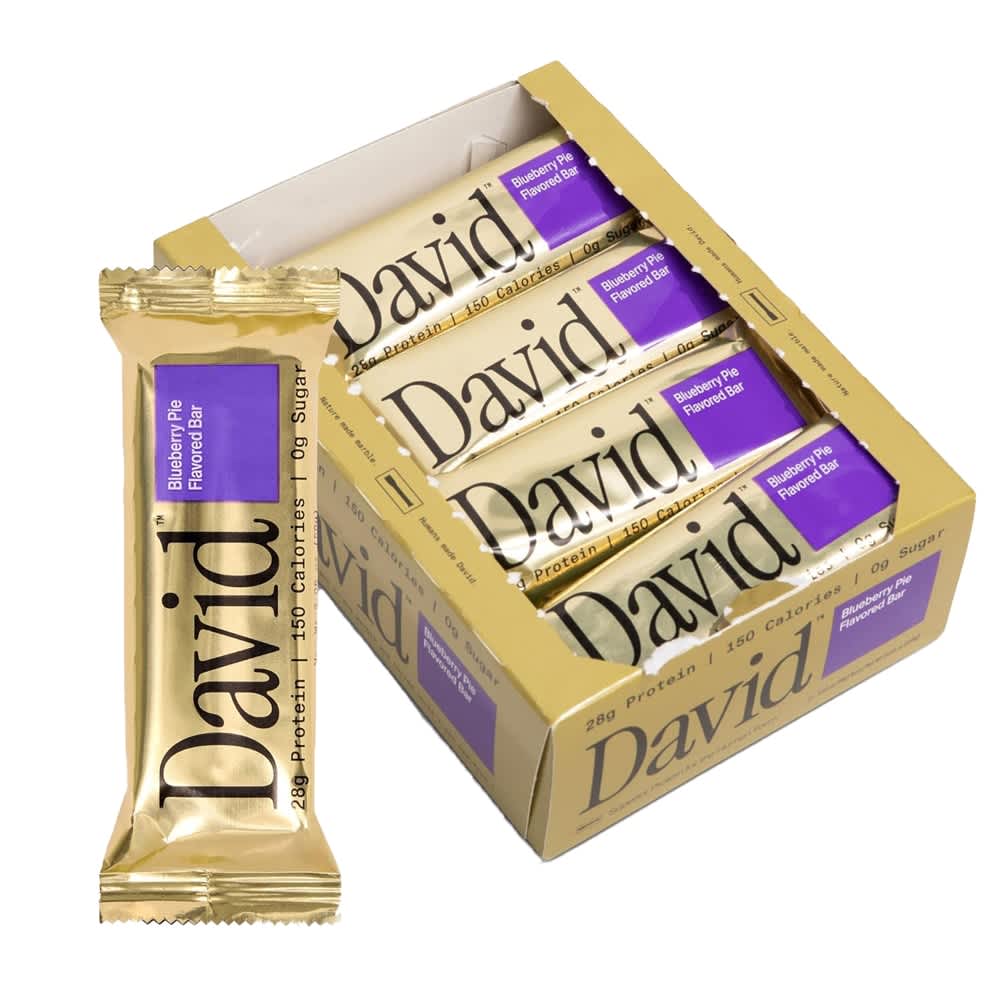
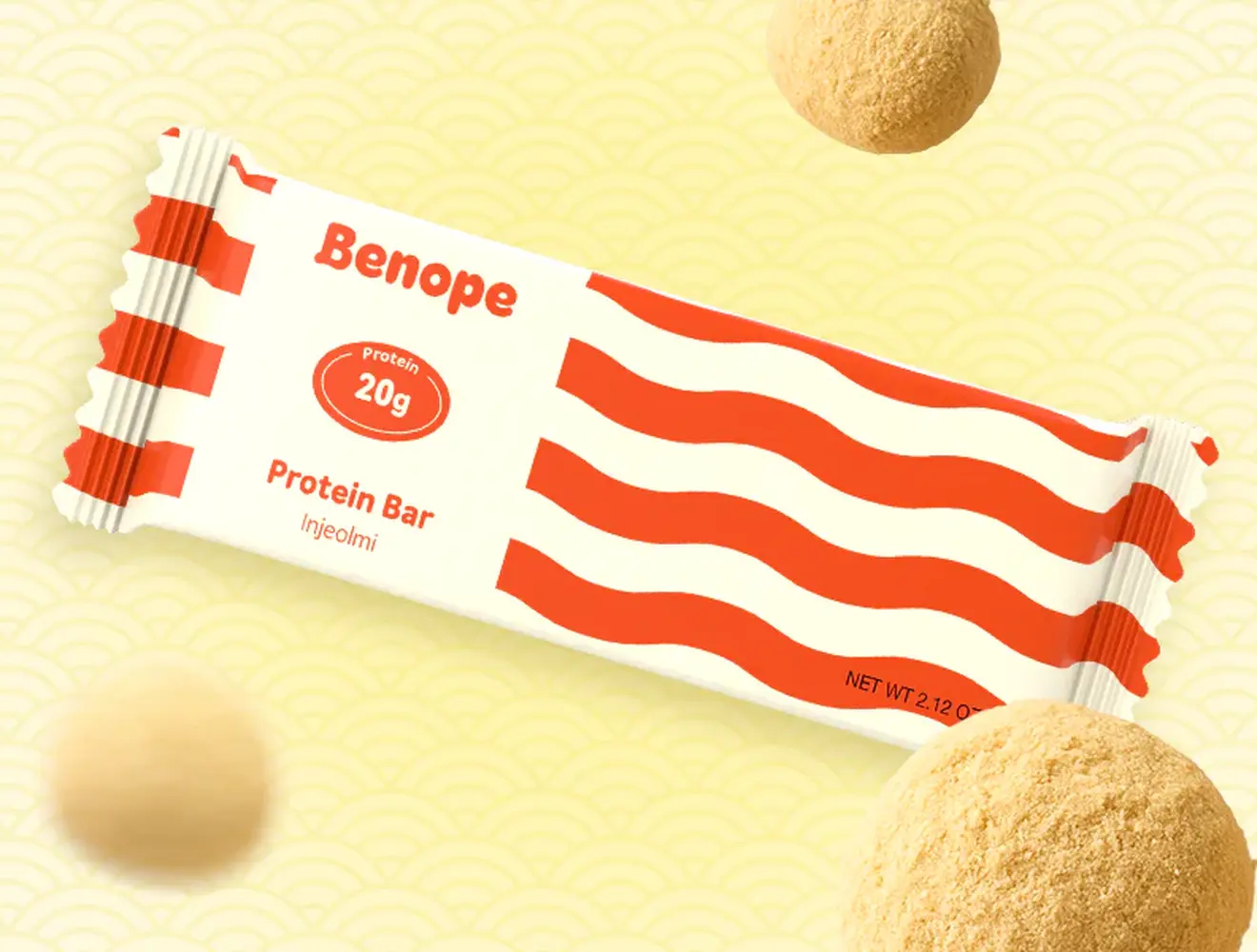
The pattern here is not accidental: David (#1–2), Quest (#7–25), and Benope (#8–20) each use artificial sweeteners as the backbone of their formulation, and each produces bars that score in the top 6% of the entire catalogue.
David: the zero-sugar leader
David Protein Bar Cake Batter holds the #1 spot in our database not because of a lucky ranking methodology, but because the macro profile is genuinely extreme. 45.16 g of protein per 100 g is 35% more protein density than a Quest bar. 0 g sugar, 0 g saturated fat, 3.23 g total fat. The only thing this bar is not optimal for is fiber — it trades the fiber that Quest delivers for more protein.
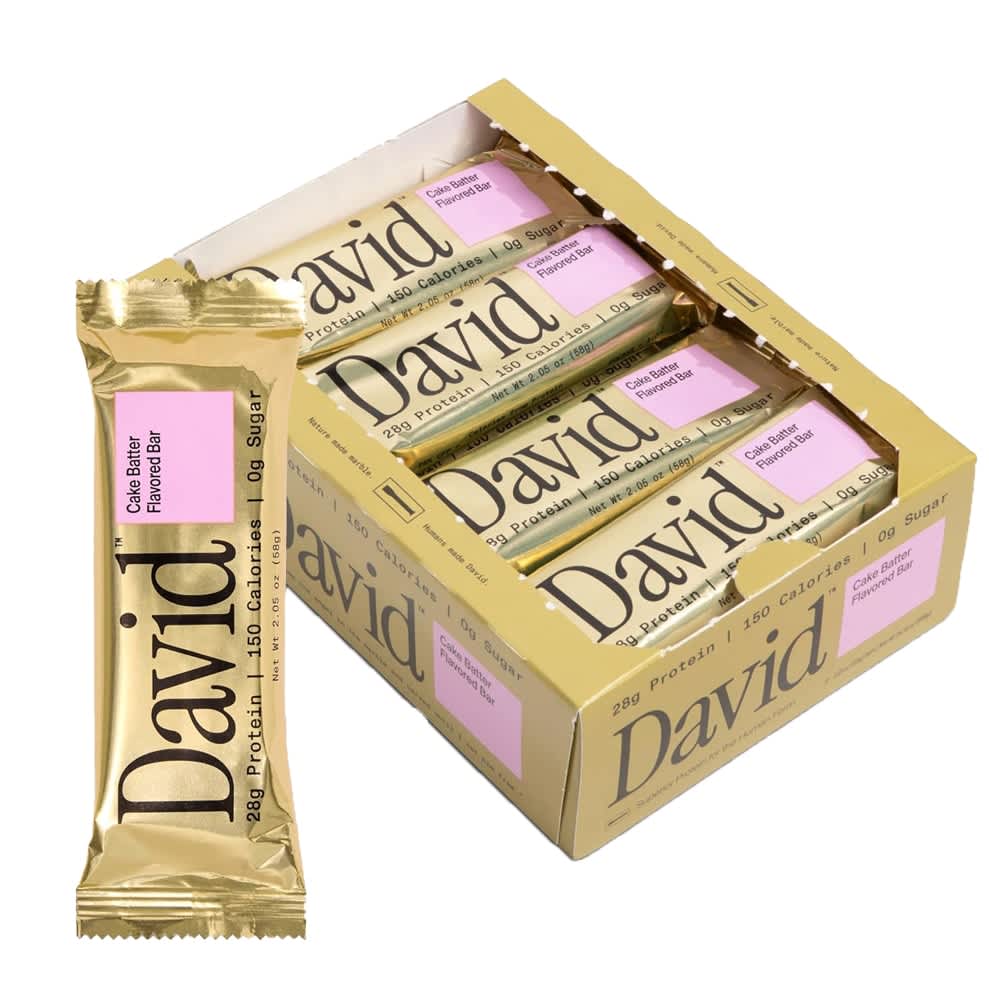
0 g sugar, 45.16 g protein per 100 g — #1 bar in the entire catalogue by XRay Score.
The Blueberry Pie variant is near-identical: same kcal, same protein, same 0 g sugar, XRay Score of 96.0 vs 96.5 for Cake Batter. Both flavors are available on Amazon. If you've only seen David bars mentioned in cutting contexts, they're equally relevant here — zero sugar makes them useful for diabetic diets, keto approaches, and anyone trying to keep glycemic impact minimal.
Quest: the reliable sugar-free workhorse
Quest bars run at 1.67 g of sugar per 100 g across most of their lineup — low enough to qualify as near-zero for practical purposes, and the result of using sucralose and erythritol as their sweetener system. At 33–35 g protein per 100 g with 20+ g of fiber per 100 g, they're nutritionally excellent and widely available at consistent prices.
1.67 g sugar, 20 g fiber, 33.33 g protein — rank #9 overall. The most widely available sugar-free bar.
The fiber angle is particularly relevant for sugar-free contexts. Diabetic and keto-adjacent audiences are often already focused on glycemic control, and Quest's 20+ g fiber per 100 g helps with both satiety and blood sugar response in a way that David bars — which have minimal fiber — don't.
We ranked every Quest bar flavor head-to-head in our Quest bar flavor ranking. The differences between flavors are small (1.67 g sugar across essentially all standard flavors), so the choice is mostly taste-driven.
Benope: sugar-free from the other side of the world
Benope is a Korean brand that doesn't market its bars as "sugar-free" — it just happens that their Black Sesame and Injeolmi flavors land at 1.67 g of sugar per 100 g as a result of their formula. At 33.33 g protein per 100 g and 25 g of fiber per 100 g (for the Black Sesame variant), Benope bars have the best fiber numbers in the top 20 by a significant margin.
| Metric | Side A | 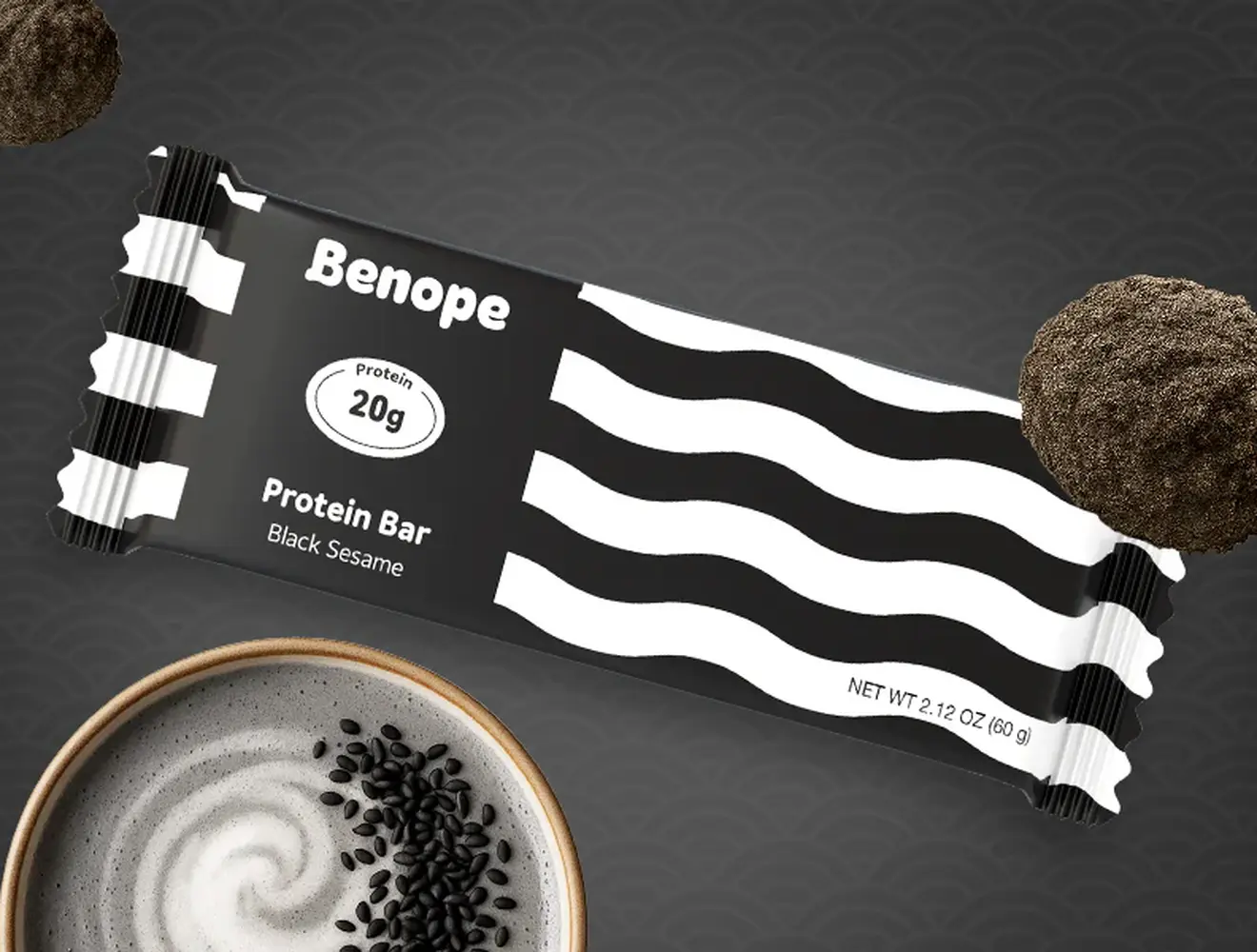 Side B Side B |
|---|---|---|
| Protein / 100 kcal | 18.7 g | 11.1 g |
| Protein / 100 g | 45.2 g | 33.3 g |
| Calories / 100 g | 241.9 kcal | 300.0 kcal |
| Fat / 100 g | 3.2 g | 8.3 g |
| Net carbs / 100 g | 12.0 g | 18.3 g |
| Fiber / 100 g | 0.0 g | 25.0 g |
| Sugar / 100 g | 0.0 g | 1.7 g |
The Black Sesame variant ranks #8 overall with a 97th-percentile fiber score — no other sugar-free bar in the catalogue comes close on that dimension. If your goal is low sugar and high fiber together (relevant for digestive health or diabetes management), Benope beats every Western brand in that combination. We covered the full Benope lineup in our Asian-inspired protein bar flavors piece.
What to know about sugar alcohols
Most sugar-free protein bars use erythritol, maltitol, or sorbitol. It's worth understanding what you're buying:
- Erythritol (used by Quest and David): minimal digestive impact for most people, passes through without being absorbed. Near-zero effective calories.
- Maltitol (used by some cheaper bars): has a higher glycemic index than other sugar alcohols and provides roughly 2 kcal per gram. Not ideal for strict keto.
- Sorbitol: more likely to cause digestive discomfort at high volumes.
Quest and David both use erythritol as their primary sweetener, which is why they work for both diabetic audiences (low glycemic impact) and keto audiences (minimal metabolic calories). If the label says "maltitol-sweetened," the practical carb impact is higher than the "net carbs" line suggests.
Bottom line
The best sugar-free protein bars aren't sugar-free at the expense of anything — they're sugar-free because the formula that maximises protein efficiency doesn't have room for sugar. David bars lead the category on pure protein density. Quest leads on fiber and accessibility. Benope leads on fiber-plus-protein combined. If you're managing blood sugar, following a keto approach, or just prefer to keep sugar minimal, the data is on your side here: these aren't compromise choices. They're the top of the catalogue.