Scroll through any supplement store and you'll see the same rotation: chocolate, vanilla, peanut butter, cookies & cream. Maybe a birthday cake if the brand is feeling adventurous. It's safe territory, and it sells — but it also means that most protein bars taste more or less like each other.
Meanwhile, Asia has been doing genuinely interesting flavors for decades. Black sesame pastries in Korea, taro buns in the Philippines, matcha everything in Japan, sweet potato desserts across East Asia. They are staple flavors with deep culinary roots, and now they're showing up in protein bars. You might have to look a bit harder than usual to find them, but that's why we are here.
The good news: you don't have to sacrifice your macros for a more interesting snack drawer. Some of these bars are scoring among the highest in our entire catalogue. Let's dig in.
Benope: The Korean Brand Dominating the Top 20
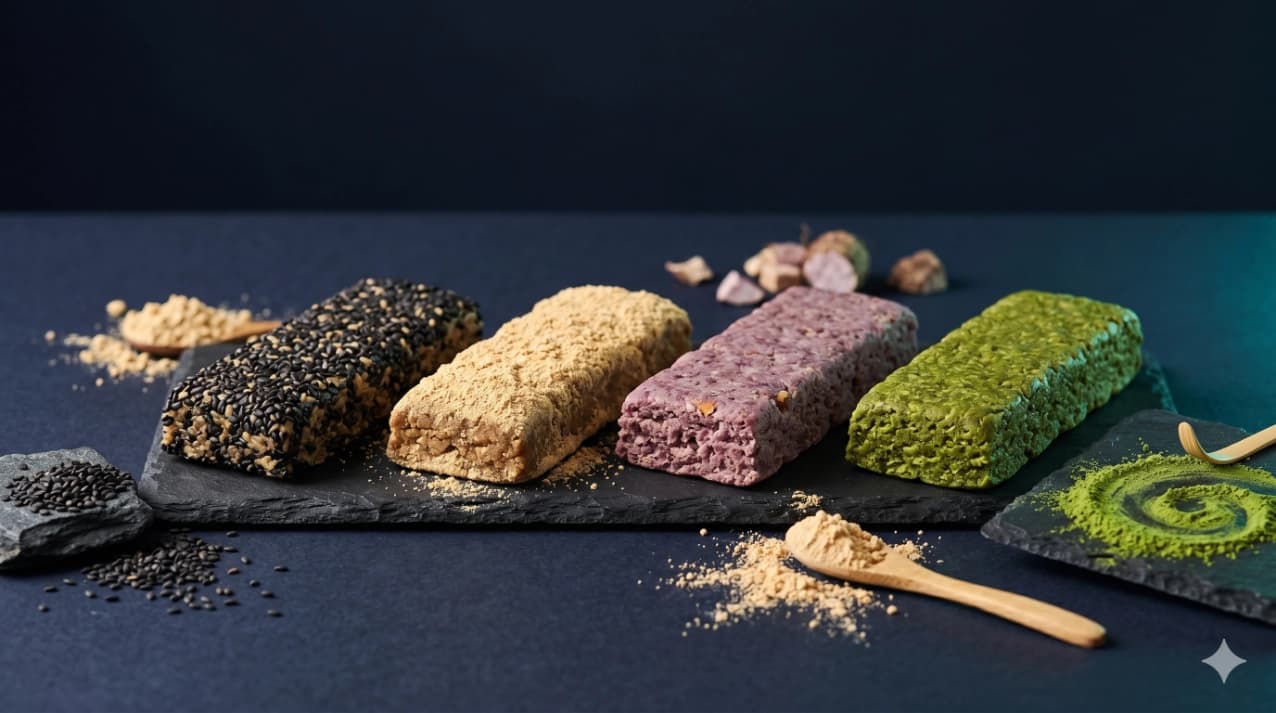
If you haven't heard of Benope, you're not alone — they're a small Korean brand making protein bars that look nothing like the Western competition. Minimalist packaging, clean ingredient lists, and a lineup of flavors that reads like a Seoul dessert menu: Black Sesame, Injeolmi, Sweet Potato, and Green Tea.
Here's what caught our attention: these Asian-inspired flavors are not only interesting but nutritionally exceptional as well. Every single one of their bars lands in the top 20 out of over 430 protein bars in our catalogue. The Black Sesame variant sits at #8 overall with an XRay Score of 89.2. Injeolmi is at #10. Green Tea at #12. Even Sweet Potato, the lowest-ranked of the four, hits #20 — still in the top 5% of all bars we've scored.
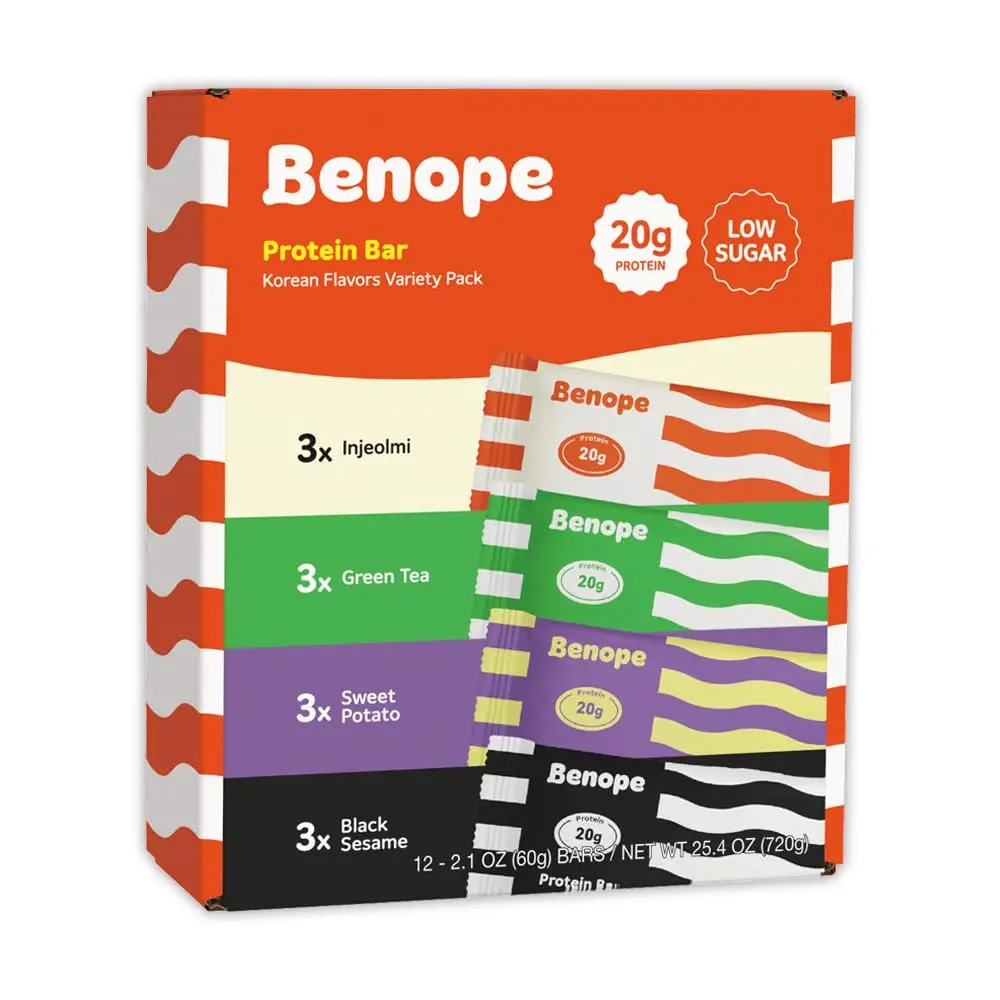
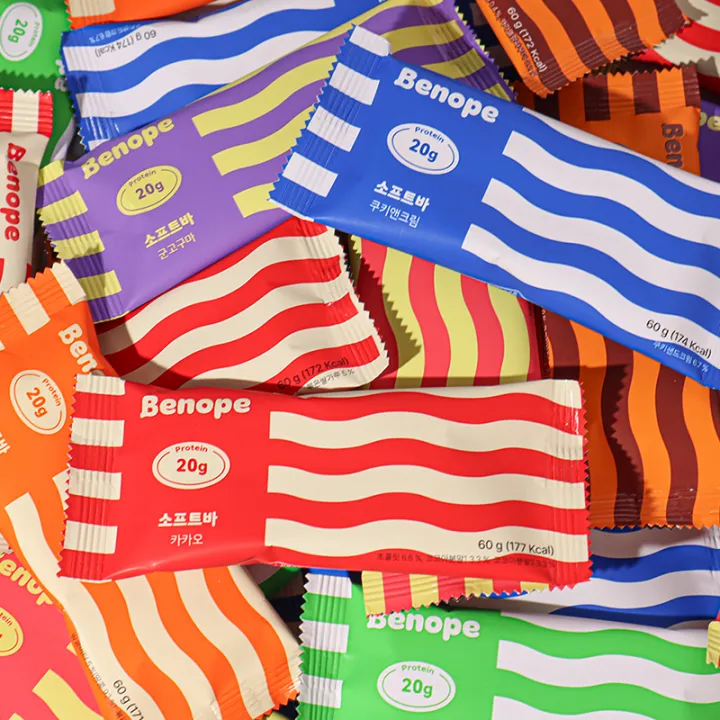
What makes them work nutritionally? All Benope bars deliver 33.33 g of protein per 100 g — that's competitive with the very best bars on the market. They're gluten-free across the board, and their fiber numbers are outstanding: the Black Sesame variant packs 25 g of fiber per 100 g, earning it a 97th-percentile fiber ranking. The sugar content stays remarkably low too — the Injeolmi bar has just 1.67 g of sugar per 100 g.
The Black Sesame bar is the standout. That distinctive roasted sesame flavor translates surprisingly well to a protein bar format — it's savory-sweet rather than candy-sweet, which makes it feel less like a treat and more like actual food. If you've ever had black sesame soup or black sesame mochi, you know the flavor profile. If you haven't, think toasted nuts with a slightly smoky edge.
Then there's Injeolmi — arguably the most unusual protein bar flavor in our entire database. It's based on the Korean rice cake dessert, which has a roasted soybean powder coating that gives it this warm, nutty, slightly earthy taste. It's the kind of flavor that makes you stop mid-bite and think, "wait, this is a protein bar?" At #10 overall with an XRay Score of 88.8, the macros more than back up the novelty.
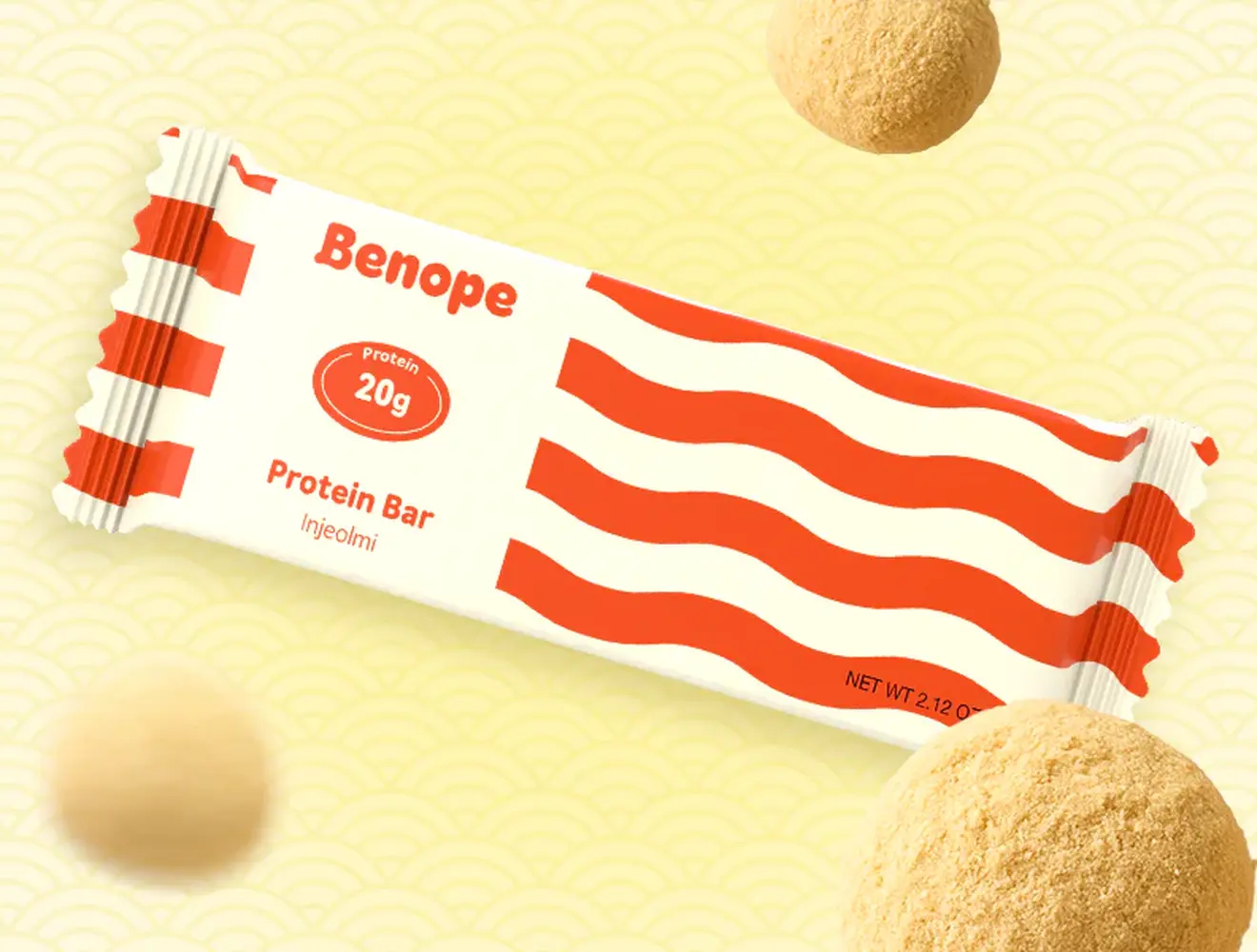
Traditional Korean rice cake flavor — the most unique protein bar in the catalogue.
The Sweet Potato and Green Tea variants round out the Asian-inspired lineup. Sweet Potato leans into that natural root-vegetable sweetness — think Korean goguma desserts — while Green Tea delivers a gentler, less bitter take on matcha. Both still land in the top 5% of all bars.
The Matcha Wave: Every Matcha Protein Product in the Catalogue
Matcha is comfortably the most mainstream Asian flavor in the protein world right now. We found matcha across bars, snacks, and powders — and the range is wider than you might expect.


Starting with bars: MyProtein's Layered Bar in Matcha is the most accessible entry point — familiar layered format, widely available, ranked #171 with 33.33 g protein per 100 g. The matcha flavor is subtle here, more of a green tea background note than the earthy punch you'd get from a ceremonial-grade bowl. PhD's Smart Protein Bar in Dark Choc Matcha takes a different approach, pairing the green tea bitterness with dark chocolate to create a bridge flavor for people who aren't ready for straight matcha. It lands at #242 with 31.25 g protein per 100 g.
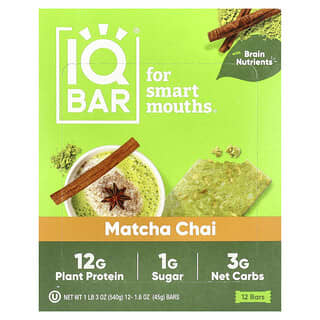
For plant-based options, IQBAR's Matcha Chai layers matcha with warm chai spices — cinnamon, cardamom — over a pea protein base. It's vegan and keto-friendly, sitting at #259 but with a standout 97.6th-percentile low-carb score (just 6.67 g net carbs per 100 g). And The Feel Bar's Matcha Latte + Caffeine is the wildcard: organic, vegan, and it includes caffeine — making it a genuine coffee-replacement play. It ranks #226 with 26.32 g protein per 100 g.
MyProtein also pushes matcha beyond bars. Their Crispy Coated Protein Wafer in Matcha is a sweet snack format — lighter, crunchier, more of a treat. The macros are heavier at 547.5 kcal per 100 g (that crispy coating adds up), but it's a fun way to get the flavor if bars aren't your thing. And if you're into powders, MyProtein runs three matcha whey isolate variants: Matcha Latte (#64 among powders, XRay 71.3), Matcha Blueberry (#73), and Matcha Mango (#89) — all whey isolate, all scoring in the top third of protein powders.
Taro: The Hardest to Find
For taro lovers, Aloha's Organic Protein Bar in Taro is currently the only taro bar in our catalogue. It's vegan, organic, soy-free, and gluten-free — a genuinely clean label with that signature purple taro flavor familiar from boba shops. The macros are softer at 25 g protein per 100 g and a ranking of #339, but if dietary flags and ingredient quality matter to you, it's a strong pick. Taro as a protein bar flavor is still rare — expect more to appear as the boba-tea generation grows up and brands start paying attention.
The broader trend is clear: as protein bars mature as a category, flavor variety is becoming a real differentiator. We covered how nostalgic flavors are pulling from Western childhood staples — cereal, s'mores, birthday cake. Asian-inspired flavors are doing something different: pulling from culinary traditions that most Western palates haven't encountered in bar form. As we found in our Flavor Tax analysis, interesting flavors don't always cost you nutritionally — and Benope is the proof. Sometimes the most exotic option is also the best one.