MacroXray may earn a commission on some links in this article at no extra cost to you. Full disclosure.
Quest bars dominate protein bar rankings — ours included. The top five bars in our catalogue are all Quest, and their best flavors score above 89 on the XRay. So when IQBAR shows up with a plant-based formula and a "brain + body nutrition" pitch, the obvious question is: can it actually compete?
The short answer is no — not on macros. The longer answer is more interesting.
The numbers, honestly
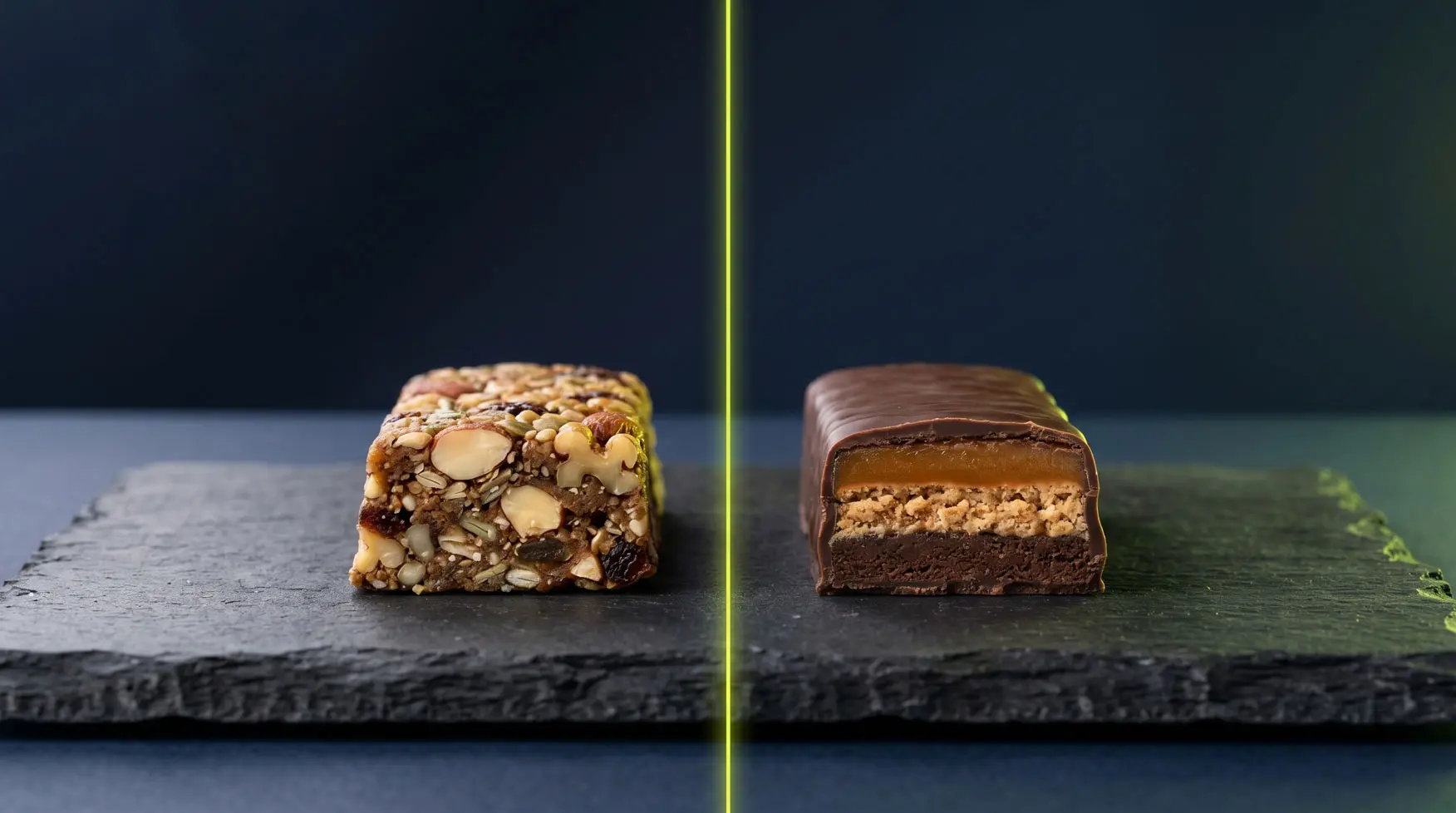
Let's start with the head-to-head. We're comparing IQBAR's highest-scoring flavor (Peanut Butter Chip, XRay 50.9) against Quest's top bar (Chocolate Brownie, XRay 92.6).
| Metric | 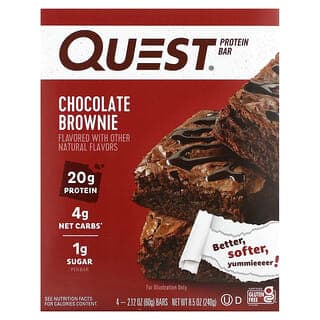 Side A Side A | 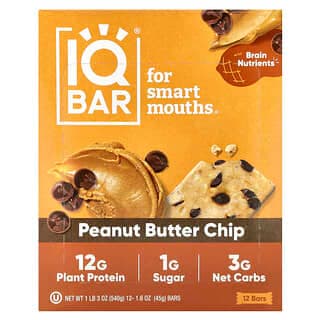 Side B Side B |
|---|---|---|
| Protein / 100 kcal | 11.8 g | 7.5 g |
| Protein / 100 g | 33.3 g | 26.7 g |
| Calories / 100 g | 283.3 kcal | 355.6 kcal |
| Fat / 100 g | 10.0 g | 22.2 g |
| Net carbs / 100 g | 13.3 g | 6.7 g |
| Fiber / 100 g | 25.0 g | 20.0 g |
| Sugar / 100 g | 1.7 g | 2.2 g |
The XRay gap is massive: 92.6 vs 50.9. That's not a close call — it's a different league. Here's why:
Quest Chocolate Brownie delivers 33.3 g of protein per 100 g at just 283 kcal. That's 11.8 g of protein per 100 kcal — elite territory. IQBAR Peanut Butter Chip delivers 26.7 g of protein per 100 g at 355.6 kcal, working out to 7.5 g of protein per 100 kcal. You're getting roughly 36% less protein per calorie with IQBAR.
The fat story widens the gap further: Quest sits at 10 g of fat per 100 g while IQBAR hits 22.2 g. That's not a typo — IQBAR carries more than double the fat. The source is mostly nuts and cocoa butter, which aren't "bad" fats, but they bring calories along for the ride.
Where IQBAR quietly wins
If this were purely a protein-delivery contest, we'd stop here. But IQBAR is playing a different game — and there are a few dimensions where it genuinely outperforms.
Fiber. IQBAR's Peanut Butter Chip packs 20 g of fiber per 100 g. Quest Chocolate Brownie has 25 g — so Quest actually edges it here too. But IQBAR's fiber is consistent across flavors (15–20 g range), while Quest's fluctuates more. Both are fiber-rich compared to most bars in the category.
Sugar. IQBAR sits at 2.2 g of sugar per 100 g. Quest Chocolate Brownie is at 1.7 g. Both are essentially sugar-free — this is a wash.
The ingredient philosophy. This is where comparison charts can't capture the full picture. IQBAR uses pea protein, almonds, and cashews as its protein base — no whey, no dairy. It adds lion's mane, MCT oil, and omega-3s as functional ingredients. Whether those inclusions move the needle for you depends on what you believe about nootropics, but the plant-based protein source is a real differentiator for anyone avoiding dairy.
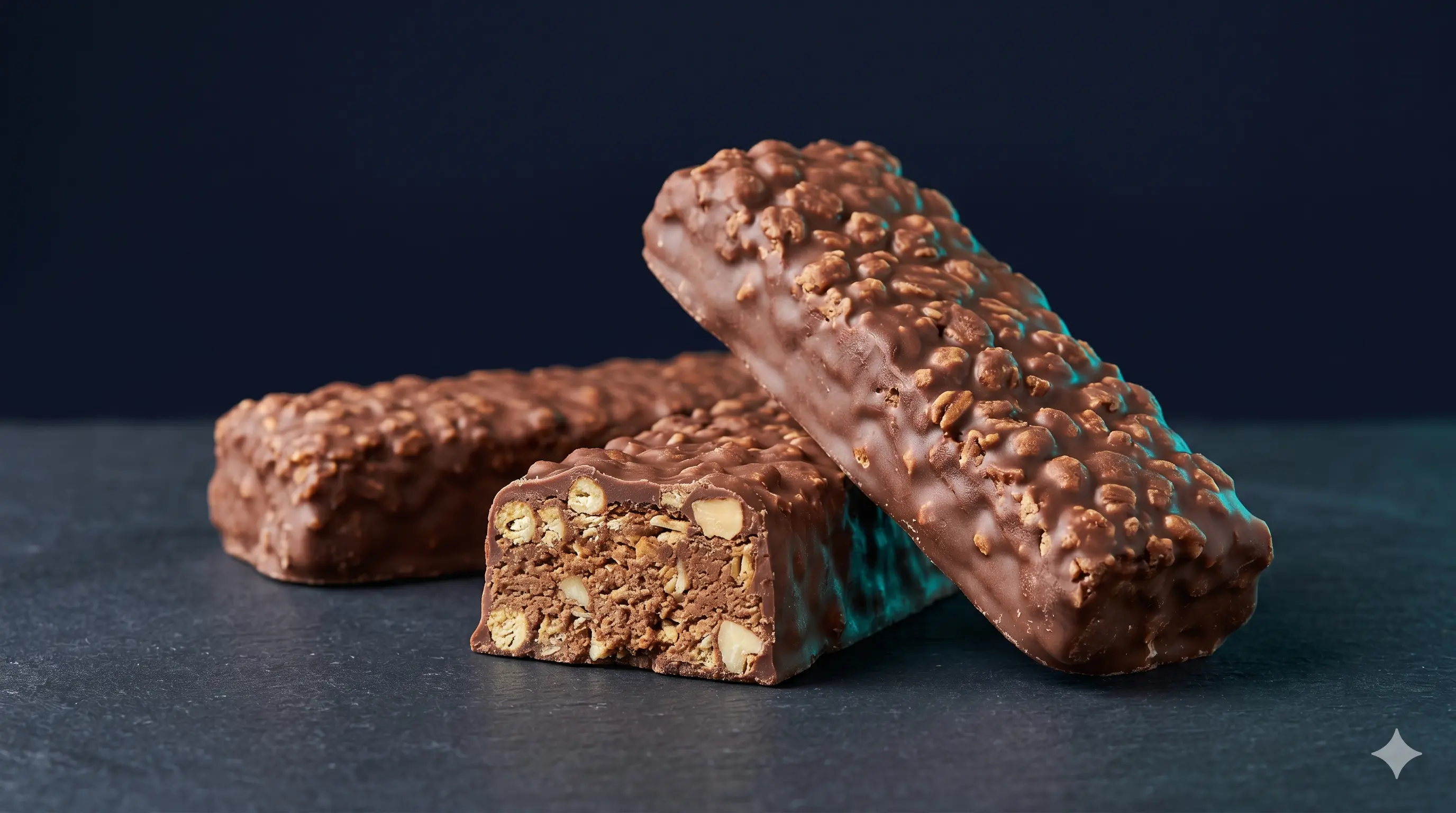
Best-scoring IQBAR — plant protein with a brain-nutrition angle.
Price. IQBAR comes in at $4.63 per 100 g vs Quest's $4.35 per 100 g. IQBAR is slightly more expensive, but the gap is small enough that it's not the deciding factor. Per gram of protein, though, IQBAR is meaningfully pricier — you're paying more for each gram because there's less protein per bar.
Who should pick which
This isn't a case where one bar is objectively better — it's a case where they serve different people.
Ranked #2 overall among all bars — 33.3 g protein per 100 g at just 283 kcal.
Pick Quest if your primary goal is protein delivery per calorie. If you're cutting, tracking macros, or just want the most efficient protein bar on the market, Quest wins by a wide margin. The flavor range is enormous — over 20 options in our catalogue — so boredom isn't an issue. We've covered how flavor choice affects Quest's macros in our Flavor Tax article.
Pick IQBAR if you're dairy-free, plant-based, or specifically interested in the functional-ingredient angle (lion's mane, MCTs, omega-3s). Accept that you're trading protein efficiency for a different value proposition. IQBAR is a solid bar — it just isn't trying to win the same race Quest is winning.
The bigger picture
The XRay Score gap (92.6 vs 50.9) sounds devastating, but context matters. Our scoring system is calibrated around macro efficiency — how much protein, how lean, how low-carb, how much fiber, for how little money. That's what it's built to measure, and Quest excels at exactly those things.
What it doesn't measure is ingredient sourcing, functional additions, allergen compatibility, or environmental footprint. IQBAR's case rests partly on dimensions our score doesn't capture yet. That doesn't make the score wrong — it means IQBAR is competing on a different axis.
If you're exploring protein snacks beyond the usual bar format, our Beyond Bars piece covers donuts, granola, pastries, and other formats that score surprisingly well.
Whichever bar you go with, keep in mind that single flavors within the same brand can vary more than you'd expect — we covered that phenomenon in detail in The Flavor Tax.