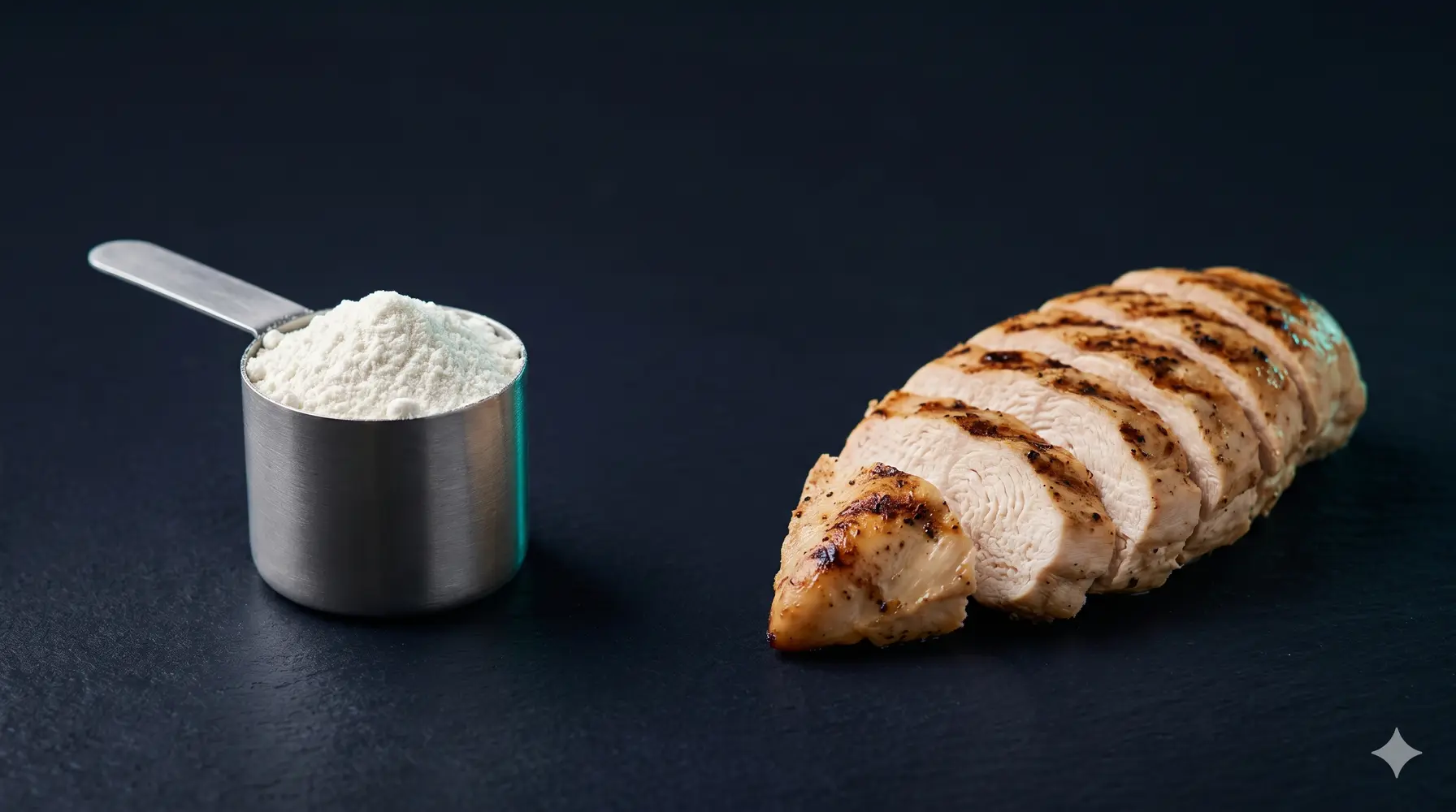
"Just eat chicken." It is the most repeated advice in fitness nutrition — and it is not wrong. Chicken breast is genuinely one of the most protein-dense whole foods on the planet. But is it actually more efficient than a well-ranked protein powder?
We pulled the numbers from our database of over 400 protein powders and stacked them against everyday foods from the USDA nutrition database. The answer is more nuanced than either side admits.
MacroXray may earn a commission on some links in this article at no extra cost to you. Full disclosure.
Two metrics, two different stories. We'll use both throughout this piece — but when the comparison gets tight, protein efficiency is the tiebreaker.
The whey isolate vs whole food showdown
We picked California Gold Nutrition Whey Isolate Unflavored — our #6 ranked milky powder with an XRay Score of 93 — and put it up against four of the most popular whole-food protein sources.
| Metric | 🍗 Chicken breast, cooked | 🥫 Tuna, canned in water | 🥚 Whole egg, cooked | 🥛 Greek yogurt, plain, nonfat | |
|---|---|---|---|---|---|
| Protein / 100 kcal | 22.5 g | 18.8 g | 22.4 g | 8.4 g | 16.9 g |
| Protein / 100 g | 87.1 g | 31.0 g | 26.0 g | 13.0 g | 10.0 g |
| Calories / 100 g | 387.1 kcal | 165.0 kcal | 116.0 kcal | 155.0 kcal | 59.0 kcal |
| Fat / 100 g | 0.0 g | 3.6 g | 0.8 g | 11.0 g | 0.4 g |
| Fiber / 100 g | 0.0 g | 0.0 g | 0.0 g | 0.0 g | 0.0 g |
| Sugar / 100 g | 0.0 g | 0.0 g | 0.0 g | 1.1 g | 3.2 g |
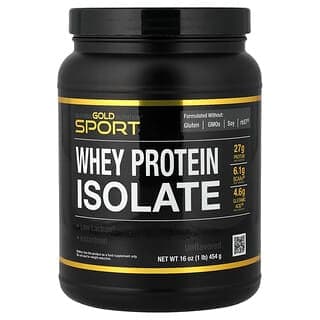
The table tells a clear story. The whey isolate delivers around 22.5 g of protein per 100 kcal — beating chicken breast at 18.8 g and leaving eggs and yogurt well behind. Tuna is the closest competitor among whole foods at 22.4 g per 100 kcal, but powder still edges it while carrying zero sodium concerns.
On pure protein density (grams per 100 g), the powder dominates at over 80 g — nearly triple the concentration of chicken at 31 g. That gap matters when you are trying to hit a protein target without overeating.
The plant-based comparison
The efficiency gap gets even wider when we look at plant-based options. MyProtein Impact Soy Unflavoured — our #1 ranked milky powder with a near-perfect XRay Score of 98.3 — goes up against the best whole-food plant proteins.
| Metric | 🧊 Tofu, firm | 🫘 Lentils, cooked | 🥜 Peanut butter, natural (no added sugar) | |
|---|---|---|---|---|
| Protein / 100 kcal | 23.6 g | 10.5 g | 7.8 g | 4.3 g |
| Protein / 100 g | 83.3 g | 8.0 g | 9.0 g | 25.0 g |
| Calories / 100 g | 353.3 kcal | 76.0 kcal | 116.0 kcal | 588.0 kcal |
| Fat / 100 g | 0.0 g | 4.8 g | 0.4 g | 50.0 g |
| Fiber / 100 g | — | 0.3 g | 7.9 g | 6.0 g |
| Sugar / 100 g | 0.0 g | 0.6 g | 1.8 g | 9.0 g |
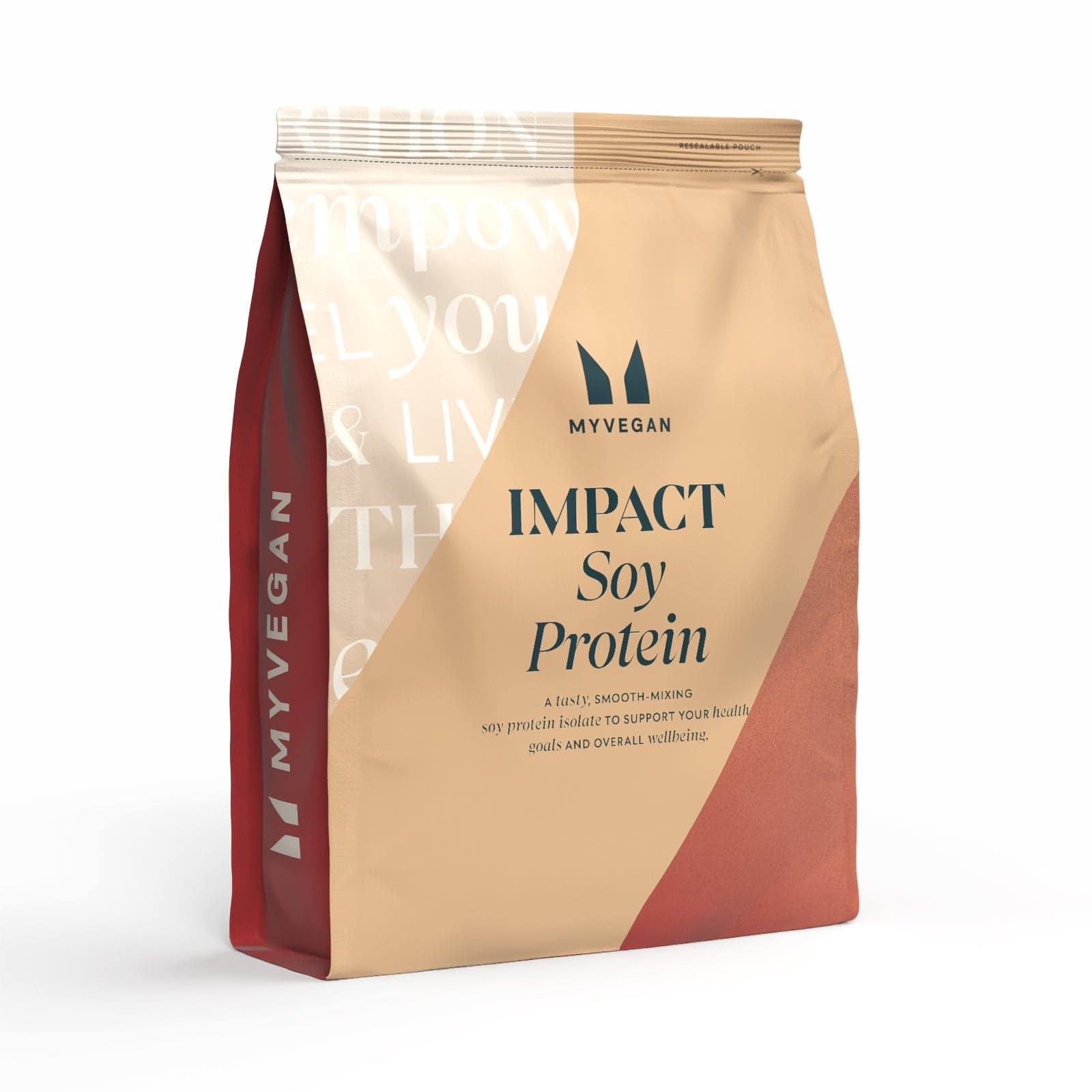
This is where powder really pulls away. The soy isolate delivers over 23 g of protein per 100 kcal. Tofu manages 10.5 g, lentils sit at 7.8 g, and peanut butter — despite its reputation as a protein food — only delivers about 4.3 g of protein per 100 kcal because it is mostly fat by calories.
For anyone on a plant-based diet trying to hit 150+ grams of protein daily, the math is brutal without a powder. You would need over 1,600 g of tofu or nearly 1,700 g of lentils to reach that target from a single source. A couple of scoops of soy isolate covers 50 g in under 200 kcal.
What whole foods bring that powder cannot
The numbers above make powder look like an obvious winner. But nutrition is not a single-axis game.
Satiety. Chewing solid food triggers hormonal signals that liquid calories do not. A 150 g chicken breast keeps most people satisfied for hours. A protein shake with the same protein content can leave you hungry within 30 minutes.
Micronutrients. Chicken brings B vitamins and selenium. Salmon brings omega-3s. Eggs bring choline. Lentils bring iron and folate. Powder brings protein and not much else.
Fiber. Lentils deliver nearly 8 g of fiber per 100 g — something no protein powder can replicate. If you are already struggling with fiber intake (most high-protein dieters are), replacing whole-food meals with shakes makes the problem worse. Check out our guide to high-fiber protein options for more on this.
Enjoyment. Sustainability matters more than optimization. If chicken stir-fry is the meal that keeps you consistent, it beats a shake you dread drinking — even if the shake is technically more efficient.
When to reach for each
Powder makes the most sense when:
- You are in a calorie deficit and need to maximise protein per calorie
- You are short on time and need protein in under two minutes
- You are on a plant-based diet and struggling to hit your target from food alone
- You need a post-workout option that is easy to digest quickly
Whole food makes the most sense when:
- You are eating at maintenance or in a surplus (calories are not scarce)
- You need the meal to keep you full for several hours
- You are already low on fiber, vitamins, or minerals
- You are eating socially — nobody orders a shake at dinner
The practical sweet spot for most people is one to two scoops of powder per day (covering 40–60 g of protein) with the rest coming from whole foods. That keeps you efficient where it matters without sacrificing the broader nutritional picture.
If you are cutting and want to optimise your powder choice further, our best protein powder for weight loss breakdown ranks over 300 powders by protein efficiency.