We've all been told protein chips are "better" than regular chips. But better how, exactly? The packaging says high protein, the branding says guilt-free, and the price tag says premium. What does the nutrition label actually say when you line them up side by side?
We pulled the numbers for some of the most popular regular chip brands — Lay's, Ruffles, Pringles, Doritos, Cheetos — and compared them against protein chips from our catalogue. The gap is bigger than you'd expect, and it's not just about protein.
MacroXray may earn a commission on some links in this article at no extra cost to you. Full disclosure.
The regular chip baseline
Let's start with what you already know. These are the approximate macros for popular commercial chips, normalised to per 100 g using USDA data and manufacturer nutrition labels:
| Brand | Kcal / 100 g | Protein / 100 g | Fat / 100 g | Carbs / 100 g |
|---|---|---|---|---|
| Lay's Classic | 536 | 7 g | 34 g | 53 g |
| Ruffles Original | 536 | 7 g | 33 g | 53 g |
| Pringles Original | 536 | 5 g | 31 g | 54 g |
| Doritos Nacho Cheese | 500 | 7 g | 25 g | 62 g |
| Cheetos Crunchy | 554 | 6 g | 36 g | 54 g |
The pattern is consistent: roughly 500–550 kcal per 100 g, 5–7 g of protein, and a fat-to-protein ratio that's anywhere from 4:1 to 7:1. In terms of protein per 100 kcal — the metric that actually tells you how efficiently a food delivers protein — regular chips land around 1.0–1.3 g. That's about as low as it gets for any packaged food.
The protein chip lineup
Now the same view, but from our protein chip catalogue. We've picked a mix of brands, formats, and price points — not just the top scorers:
| # | Product | XRay | P/100 kcal | kcal / 100 g | Fat / 100 g | Buy | |
|---|---|---|---|---|---|---|---|
1 | 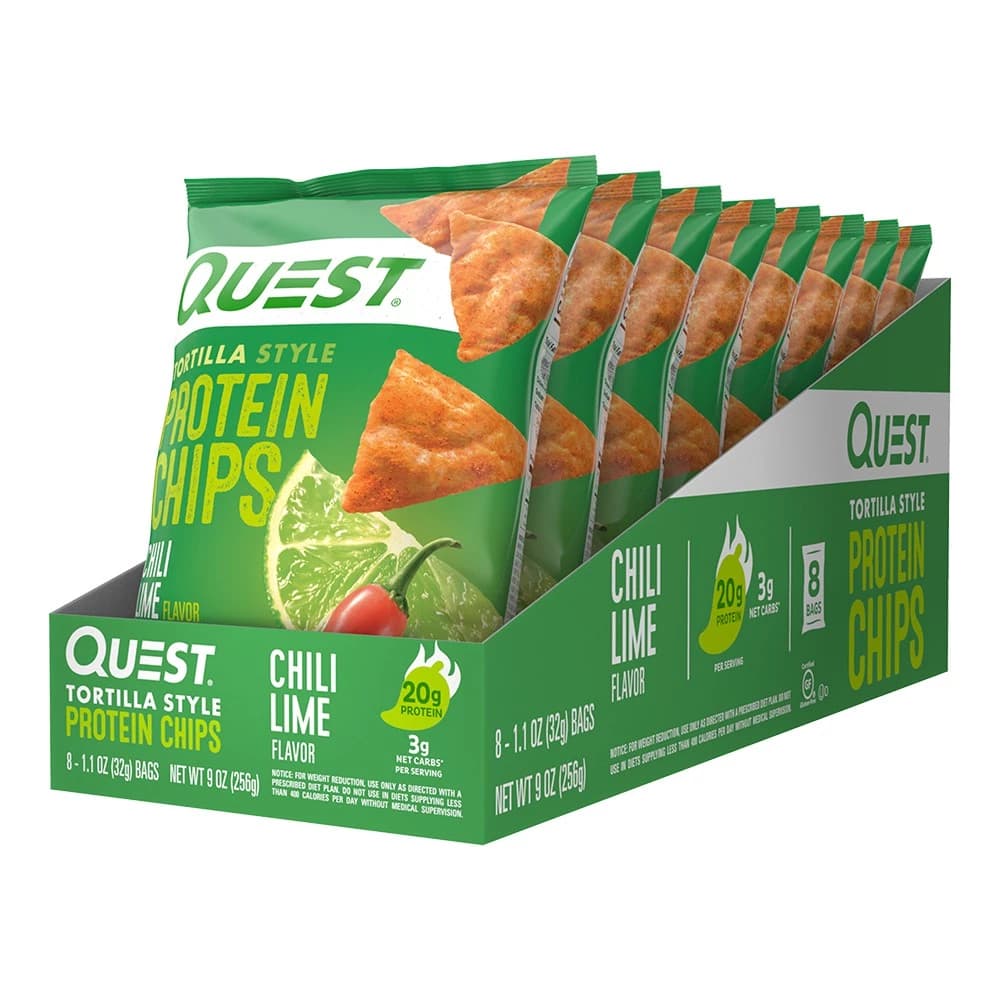 Quest Nutrition Tortilla Style Protein Chips, Chili Lime | 90 | 14.3g | 437.5 | 14.1g | Buy | |
2 |  Quest Nutrition Original Style Protein Chips, BBQ | 84 | 13.6g | 437.5 | 15.6g | Buy | |
3 | 76 | 12.0g | 368.0 | 10.0g | |||
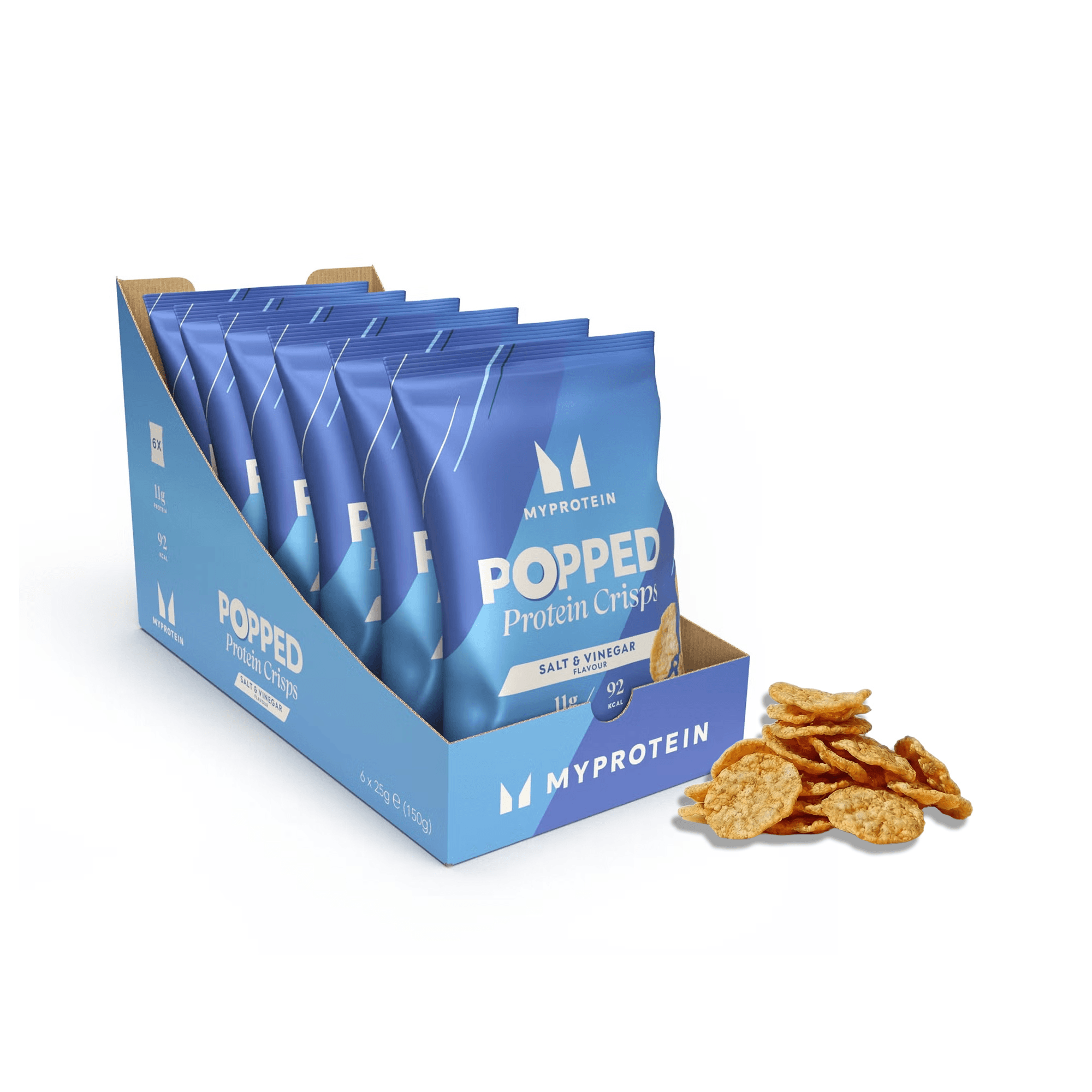
4 | 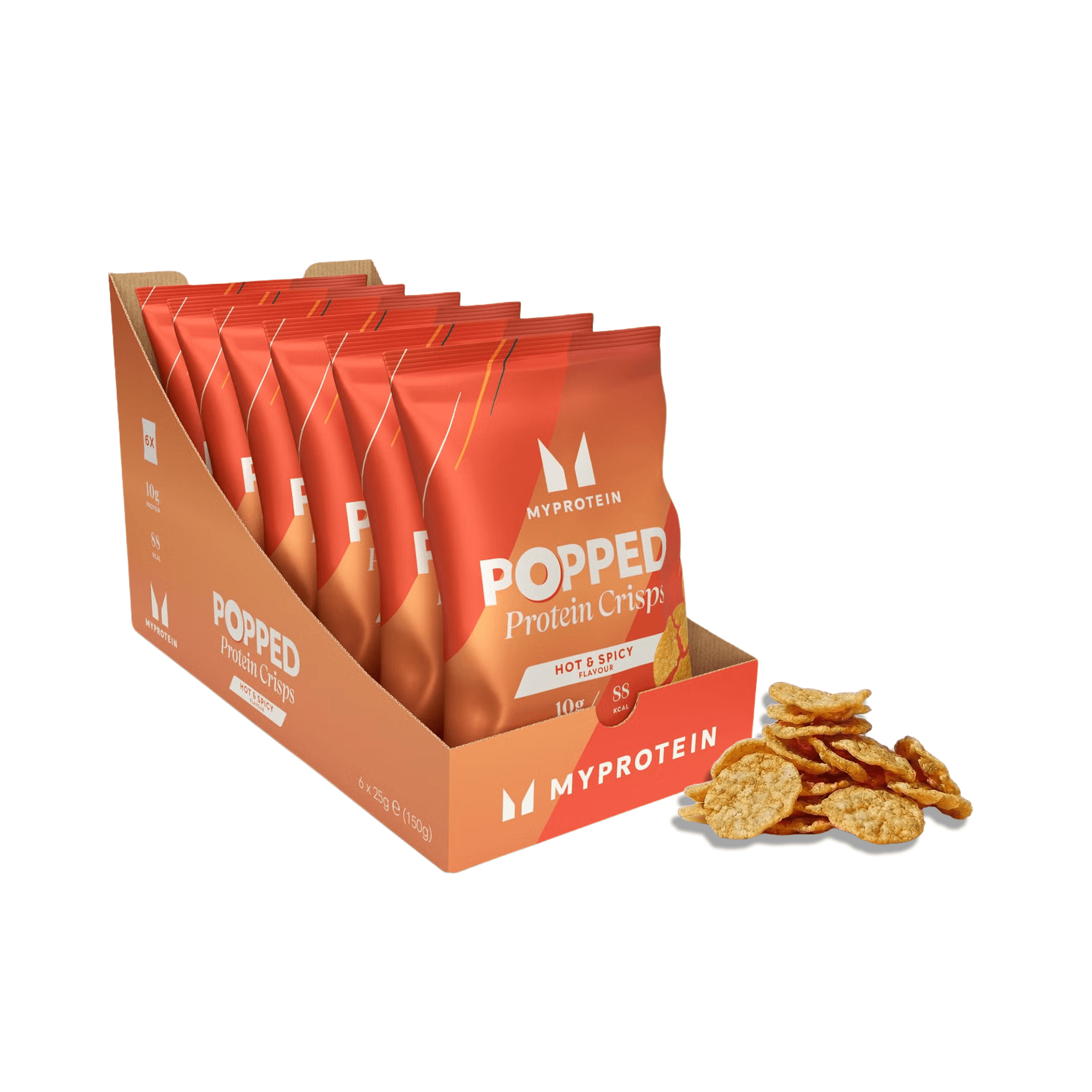 MyProtein Popped Protein Crisps (Hot & Spicy) | 83 | 11.4g | 352.0 | 8.0g | ||
5 |  Legendary Foods Popped Protein Chips, Jalapeno Cheddar | 62 | 13.3g | 441.2 | 17.6g | Buy | |
6 | 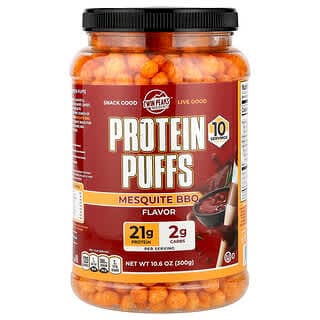 Twin Peaks Ingredients Protein Puffs, Mesquite BBQ | 92 | 17.5g | 400.0 | 10.0g | Buy |
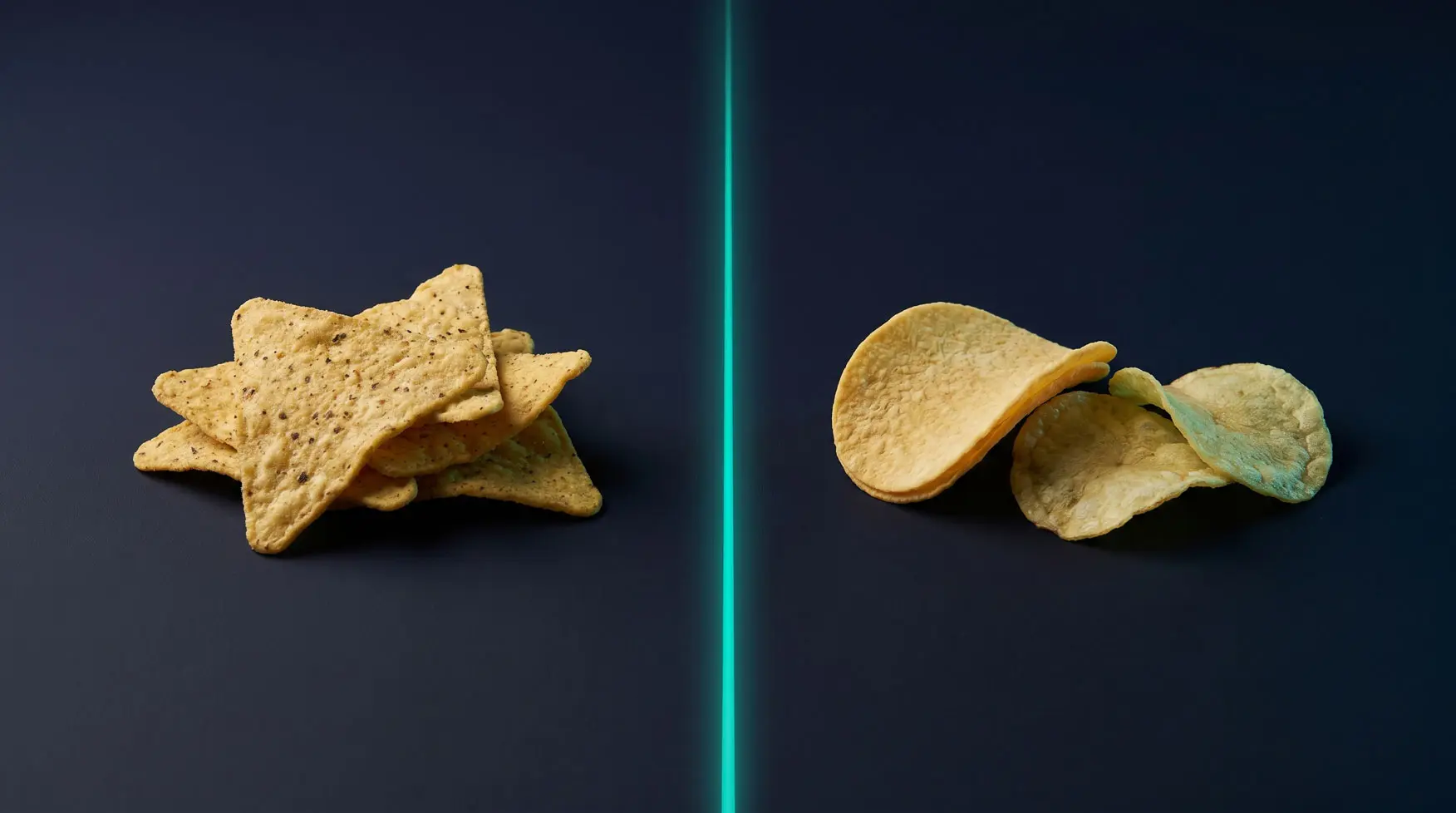
The numbers tell the story. Quest Chili Lime leads with 62.50 g of protein per 100 g at 437.50 kcal — that's a protein-per-100-kcal ratio of 14.29. Compare that to Lay's Classic at 1.31. The protein chip delivers roughly ten times more protein per calorie than a regular chip.
The MyProtein Popped Protein Crisps sit in an interesting middle ground. At 40–44 g protein per 100 g, they carry less protein than Quest's 60+ g, but they're also noticeably lower in calories (352–400 kcal vs 437) and come in at just 8–12 g fat per 100 g. They're soy-based rather than dairy-based, which makes them one of the few vegan options in the protein crisp category. The Hot & Spicy flavour scores 78.8 (rank #9) with the best leanness rating in the category.
| Metric | 🍟 Potato chips, salted | |
|---|---|---|
| Protein / 100 kcal | 14.3 g | 1.3 g |
| Protein / 100 g | 62.5 g | 7.0 g |
| Calories / 100 g | 437.5 kcal | 536.0 kcal |
| Fat / 100 g | 14.1 g | 34.0 g |
| Fiber / 100 g | 3.1 g | 4.4 g |
| Sugar / 100 g | 0.0 g | 0.3 g |
Even the lower-scoring protein chips in our catalogue — like Legendary Foods Jalapeno Cheddar at rank #11 — still deliver 55+ g of protein per 100 g. That's eight times more than Doritos.
Where the real gap is
Protein gets the headline, but the fat numbers are where regular chips really fall apart. Lay's, Ruffles, and Cheetos all sit at 33–36 g of fat per 100 g. The Quest tortilla chips come in at 14–16 g. Twin Peaks Mesquite BBQ Puffs are even leaner at 10 g of fat per 100 g — less than a third of what you'd get from a regular chip.
The carb story is similar. Regular chips hit 53–62 g of carbs per 100 g, while protein chips sit at 6–16 g. That's not a small difference — protein chips carry roughly a quarter of the carbohydrate load of regular chips, gram for gram.
The #1 ranked protein crisp in our catalogue — 62.50 g protein per 100 g, 14.06 g fat. For context, Doritos Nacho Cheese has 7 g protein and 25 g fat per 100 g.
A head-to-head that tells you everything
Let's zoom in on one comparison that makes the point clearly. Quest's BBQ chip vs Twin Peaks' Mesquite BBQ puff — same flavour territory, different brands, different formats:
| Metric | Side A | Side B |
|---|---|---|
| Protein / 100 kcal | 13.6 g | 17.5 g |
| Protein / 100 g | 59.4 g | 70.0 g |
| Calories / 100 g | 437.5 kcal | 400.0 kcal |
| Fat / 100 g | 15.6 g | 10.0 g |
| Net carbs / 100 g | 12.5 g | 6.7 g |
| Fiber / 100 g | 3.1 g | 0.0 g |
| Sugar / 100 g | 3.1 g | 6.7 g |
Quest BBQ delivers 59.38 g protein per 100 g at 15.62 g fat. Twin Peaks BBQ delivers 70 g protein at just 10 g fat — one of the leanest protein snack numbers in our entire catalogue. The trade-off is texture: Quest chips are crunchy and dense, more like a traditional tortilla chip. Twin Peaks puffs are lighter and airier, closer to a Cheeto in format. Both are valid — it depends what you're reaching for.
The calorie surprise
Here's the part people don't expect: protein chips aren't significantly lower in calories than regular chips. Quest tortilla chips sit at 437 kcal per 100 g. Lay's Classic is 536 kcal. That's a gap, but it's not the 2x or 3x difference people assume when they hear "healthier chip."
The magic isn't in the total calories — it's in what those calories are made of. At 437 kcal, the Quest chip gives you 62 g of protein and 14 g of fat. At 536 kcal, Lay's gives you 7 g of protein and 34 g of fat. Same snacking experience, radically different macro composition.
This matters because protein is the most satiating macronutrient. A 32 g bag of protein chips (about 140 kcal) will keep you fuller for longer than a 28 g bag of regular chips (about 150 kcal), even though the calorie count is nearly identical. The protein does more work per calorie.
What about taste?
This is the honest part: protein chips don't taste like regular chips. They're better than they were five years ago — significantly better — but the texture is different (denser, sometimes more powdery) and the flavour tends to be less punchy than a Dorito or a Cheeto. That's the trade-off, and it's worth knowing upfront.
Within the protein chip category, though, there's real variety. Quest's tortilla-style chips are the closest to a regular chip experience — sturdy, scoopable, and available in flavours like Chili Lime and Loaded Taco that actually deliver on their name. MyProtein's Popped Protein Crisps are lighter and airier — closer to a popped chip you'd find in the health food aisle — and come in flavours like Salt & Vinegar, Hot & Spicy, and Paprika that lean more into classic crisp territory. Twin Peaks puffs go for a Cheeto-style format that's the lightest and most snackable of the bunch. Legendary Foods' popped chips split the difference with a texture somewhere between the two.
Nobody's going to confuse any of them for a bag of Ruffles. But as a snack that actually fits your macros, the comparison isn't even close.
The bottom line
Regular chips are a fat-delivery system with a little starch and almost no protein. Protein chips are a protein-delivery system with moderate fat and minimal carbs. The calorie density is comparable, but the macronutrient profile is completely different.
If you're tracking macros — or even just trying to eat more protein without overhauling your diet — swapping regular chips for protein chips is one of the simplest changes you can make. You keep the crunchy, salty snack experience and pick up 50+ extra grams of protein per 100 g while cutting fat by more than half.
The numbers don't leave much room for debate.